Yoga Equipment Buyers' Guide
Essential Yoga Equipment for Beginners to Advanced Yogis
Yoga is more than just poses and stretches. It also uses breathing exercises, meditation and in some instances philosophy. For many people yoga is a form of exercise only, whilst for others it can be a whole way of being to bring harmony between mind and body. In terms of just the exercise and stretches, there are numerous scientific studies showing that yoga can improve balance, reduce pain, enhance strength and even a person's quality of life - particularly as we age.
The right equipment can transform your yoga practice, making it more varied, more enjoyable, and/or safer. Yoga equipment can also help practitioners to progress their stretches incrementally; in a safe, systematic manner.
Modern equipment also increases the range of exercises a person can do for yoga, or yoga related strength, balance and posture. For example, yoga balls and wheels increase the total number of exercises available, whilst wobble and balance boards increase the difficulty. Bands and straps help people perform challenging poses safely.
This guide walks you through the essentials beyond just a yoga mat. The guide will cover the pros and cons of different materials, what sizes are best for you, and how to spot quality without spending more than you should.
In This Guide
- Quick Note on Mats
- Yoga Blocks
- Straps Help You Stretch Safely
- Resistance Bands for Yoga
- Yoga Wheels for Deep Backbends
- Yoga Balance Equipment
- Yoga & Pilates Equipment
- Net World Sports Product Range
- Other Yoga Equipment
- Matching Equipment to Your Practice Style
- Avoiding Common Buying Mistakes
- Yoga Equipment FAQs
- Caring for Your Kit
- Making Your Decision
As long as you have a space, that is long enough to lie down in with feet and legs extended, and wide enough to open your arms fully - you should be able to practice fundamental yoga poses. After all Yoga existed in ancient India for thousands of years without custom-made equipment. If you don't have space in your house, you can even practice yoga outdoors. In fact outdoor exercise can have a huge positive impact on mental health, but unfortunately it does depend a little on the weather conditions.
Having said that, virtually all modern yogis will choose to use at least one item of yoga equipment. Plus in the UK at least, outdoor yoga is not always an option all year round. Most practitioners will use their own yoga mat for hygiene, comfort and safety reasons. Blocks can help practitioners reach poses that might otherwise be too difficult. Straps allow people practising yoga to hold stretches, and make positions more comfortable.
Modern equipment also increases the total range of exercises you can do for yoga, or yoga related strength, balance and posture. For example, yoga balls and wheels introduce a huge array of new poses and increase the range of exercises available. In addition tools and equipment including wobble and balance boards increase the difficulty of specific poses and holds. Wheels and even rollers can also be used to increase the range and/or depth of a stretch.
For example, lying on a roller with your upper back, will increase the distance from your body to floor, meaning you can stretch your arms out further and stretch out your chest more effectively.
Quick Note on Yoga Mats
Your mat is more than just a surface. It grounds you, and is fundamental to your comfort, hygiene and enjoyment of yoga. We have written a complete yoga mat guide covering materials, thickness, grip, size and all the details that matter. Check out our yoga mat buyers guide for everything you need to know about choosing the right mat.
In this guide, we will mostly focus on the props and equipment that work alongside your mat. This equipment genuinely improves your practice once you have established your foundation.
Yoga Blocks
Blocks can be used by yogis of all levels for balance and progression into more advanced poses. Blocks let you carry out poses safely when your flexibility and/or balance is not quite advanced enough for a specific movement or pose. More flexible practitioners use blocks to explore deeper variations or rest in longer holds.
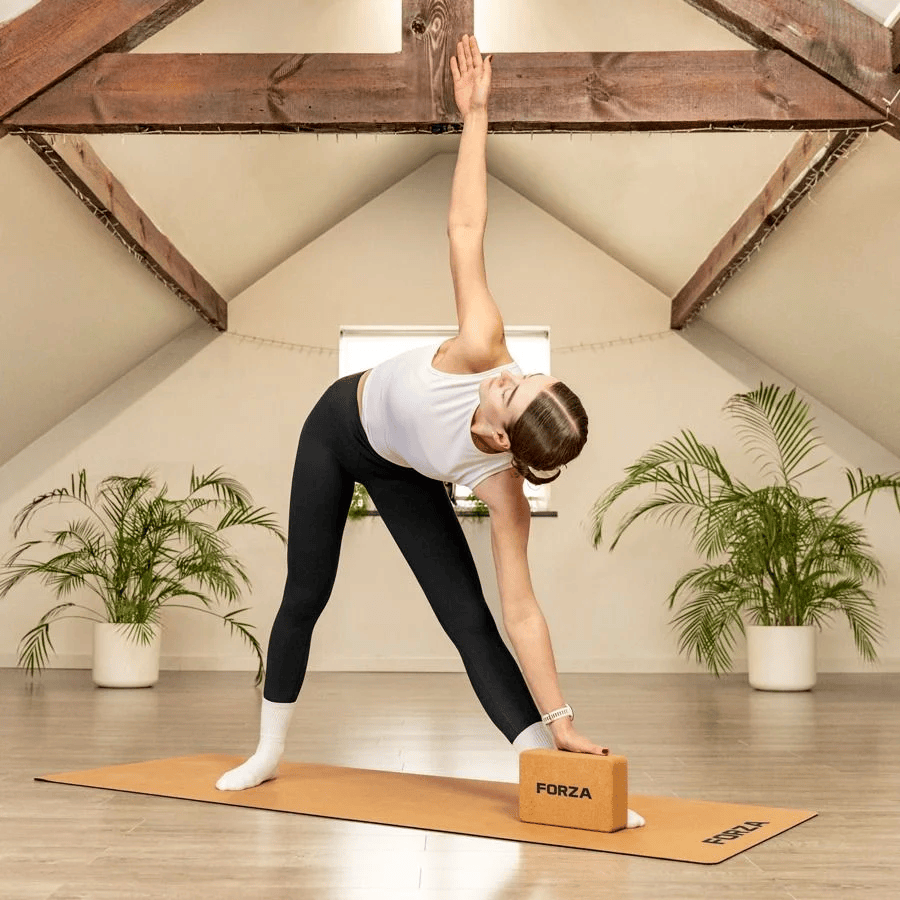
Beginners - Blocks make many more poses accessible when you can't reach the floor due to limited flexibility. They stop you from straining and forcing your body into vulnerable and potentially dangerous positions. For example, instead of rounding your back to force your hand down in Triangle Pose, you rest it on a block and keep proper alignment.
Flexible practitioners - Even flexible people use blocks differently. They help with alignment, let you rest in poses longer, and support restorative work.
Yoga Block Material Options
Foam yoga blocks are perfect for most yoga practitioners. They are comfortable, light, dense enough to support almost any practitioner's weight, and sturdy enough to help with balance. Whilst foam blocks will deform with everyday use over many years, they are great value and can last for a number of years with proper care and cleaning.
Soft, lightweight and forgiving, foam blocks offer the most support for more vulnerable areas and joints like knees, hips and the spine. As they are so light, foam blocks are also the easiest to carry and travel with. The soft curved edges and delicate touch and feel, makes foam blocks more forgiving and sometimes more comfortable to lean on.
Cork yoga blocks are sustainable and stay firm for decades. They have a natural texture that is pleasing and allows you to grip the blocks effectively and comfortably. They offer stability, hygiene and a grounded feel. Denser and heavier than foam, cork blocks tend to hold steady and can be more effective at helping with balance. The natural texture of cork, and its suberin content means grip should actually improve when you begin to sweat. Cork's natural antimicrobial properties keep it hygienic and odour-free.
An eco-friendly choice, cork is harvested from trees without having to cut them down. The cork is stripped from the exterior of the tree. Cork oak trees regenerate, and the harvested tree absorbs significantly more carbon dioxide than non-harvested trees. Studies confirm that cork oak forests act as long‑term carbon sinks, storing carbon both in the living trees and in the cork that is periodically harvested and used in products, while the trees continue to grow and regenerate new bark.
Wood blocks are the firmest option but they tend to be less popular than foam and cork designs. Wooden blocks are less forgiving and can hurt if you accidentally kneel on one for example. They are not ideal for flow sequences where you might put them down quickly and move over them. Most instructors don't use them as they are also a bit too noisy for some classrooms and studios.
| Yoga Block Material Comparison | |||
|---|---|---|---|
| Feature | Foam, EVA | Cork | Wood |
| Weight | Light | Medium to heavy | Heavy |
| Durability | Good, several years | Excellent, long lasting | Excellent |
| Grip | Good | Excellent, improves when wet | Moderate |
| Comfort | Soft and forgiving | Firm and grounded | Hard |
| Portability | Excellent | Moderate | Poor |
| Eco Friendly | Synthetic material | Yes, sustainable | Yes, natural |
| Best For | Travel and beginners | Home practice and hot yoga | Studio display |
Yoga Blocks vs Yoga Bricks
You may see both "blocks" and "bricks" mentioned when shopping for yoga props. The terms are sometimes used interchangeably, but there is a practical difference that is worth understanding.
Yoga blocks are typically larger, softer, and designed to support your body during seated poses, restorative stretches, and gentle lifts. They add height and stability to poses, making them perfect for holding challenging positions longer and improving or aligning posture.
Yoga bricks are smaller, denser, and firmer - providing a more grounded base for standing poses, balance work, and targeted alignment. The compact design gives you greater control and precision, especially in poses that require solid support.
A typical yoga brick measures 23cm x 15cm x 7.5cm and weighs around 120g. Our foam yoga bricks are made from durable, eco-friendly EVA foam. Whether you're opening your hips, aligning your spine, or engaging in poses to develop posture, every centimetre makes a difference. Having a brick and a block can help you to find the perfect alignment and complete balance. Being a single centimetre away from being able to reach the floor, is much more likely to result in a fall, or over-stretching resulting in poor posture.
Size and How to Use Them
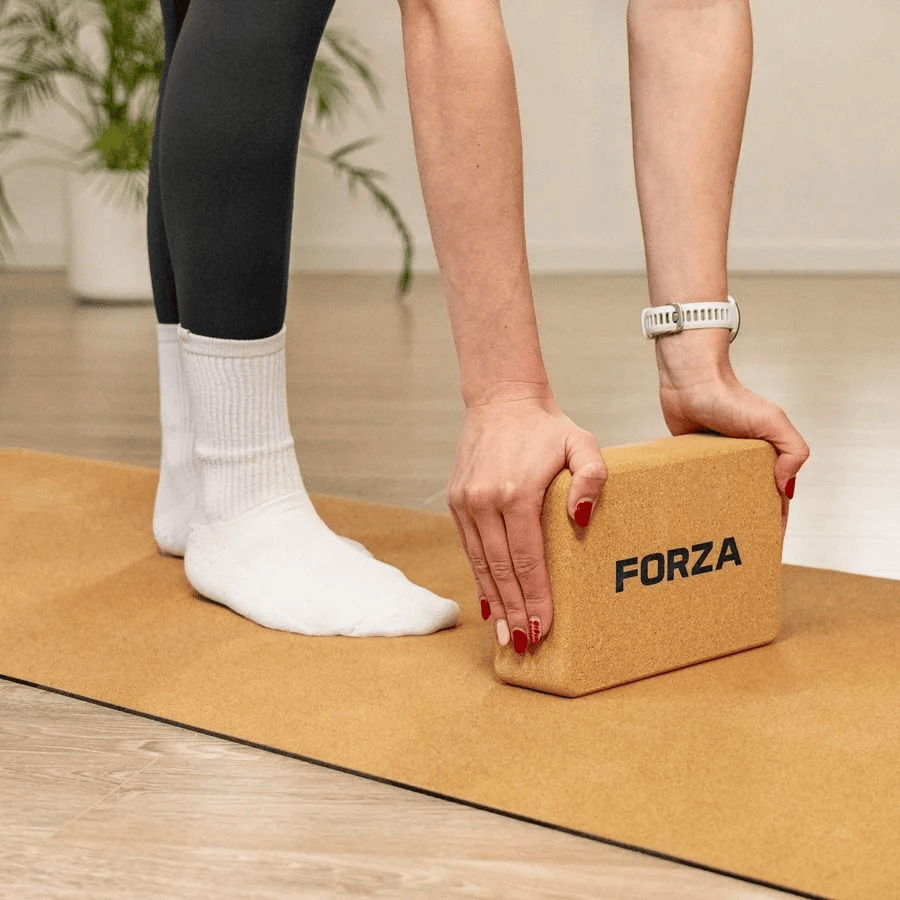
Most blocks will measure approximately 23cm by 15cm by 7cm. Blocks can be placed on the floor in different ways depending on your needs and the pose you are performing. Placing the block flat gives you the lowest support but the greatest level of stability. If the block is on its side you get medium range and balance, and standing tall gives maximum height to reach poses, but this offers limited stability.
Three block heights - Think of the block as having three usable heights:
- Low: Block lying flat (largest surface on the floor) - lowest height, most stability.
- Medium: Block on its long, narrow side - medium height with moderate stability.
- High: Block standing on its short end - maximum height, least stability, best used when you need extra reach but can still balance well.
You choose the height based on how much extra reach or support you need: lower for more stability, higher for more height.
Blocks for Standing Poses
Blocks are excellent when it comes to standing poses, especially for those struggling with the flexibility or the range of motion required to reach the floor. Instead of rounding your back, you can rest your hand on a block. This dramatically reduces the risk of injury and poor form.
Blocks for Sitting & Mat Poses
Many people, especially those who sit down a lot, have some kind of pelvic tilt and/or tight hip flexors. Sitting on blocks can help you to tilt your pelvis forwards, and make it easier to fold/stretch from the hips rather than rounding your lower back. In restorative poses, blocks can help you relax by providing support and stability. You can also use blocks to cushion vulnerable areas of the body. The sacrum or knees for example. This allows you to rest in a position for minutes, rather than seconds and reduces discomfort substantially. For any yoga inversions, using a block under your shoulders in Shoulderstand pose for example, can protect your neck from too much pressure. Under your hands in Crow pose they bring the floor closer while you are building strength.
Yoga Block Benefits
- Improves alignment by effectively “bringing the floor closer” to your hands or feet so poses feel more stable and relaxing.
- Supports flexibility by allowing beginners to work safely into stretches that strain and target tight hips and hamstrings while still maintaining good form.
- Reduces strain on wrists, knees and lower back by providing extra height and support in weight-bearing poses.
- Helps build strength when squeezed between the thighs, held between the hands or used to increase the load in standing & core poses.
- Enhances balance in standing & one-legged poses by offering a stable contact point.
- Allows advanced practitioners to deepen poses and refine technique, using the block to explore greater range of motion with control.
- Enables more comfortable, restorative practice by supporting the body so you can relax into longer holds without overloading joints.
- Encourages better body awareness, helping yogis at every level to feel optimal alignment & engage the right muscles in each pose.
- Used for corrective posture adjustments. For example, people with tight hamstrings - sitting on a block in seated forward folds tilts your pelvis forward and makes proper form possible.
| FORZA YOGA BLOCKS | |
|---|---|
| Product | Key Features |
| FORZA Yoga Block Pack of 2 | Lightweight EVA foam for everyday practice |
| FORZA Cork Yoga Block Pack of 2 | Firm stable feel with excellent grip |
| METIS Yoga Block and Brick | Block plus brick for flexible height options |
Straps Help You Stretch Safely
Yoga straps extend your reach - it's a bit like having an extra few inches of arm-reach to grab hold of your foot or lock your hands together. For example, you might use a strap when your hamstrings are tight to touch your toes, or your chest, shoulders and arms are not flexible enough to enable you to clasp your hands together behind your back. Straps let you work on flexibility without yanking yourself into positions your body is not ready for. Instead of over-reaching and falling out of good posture and alignment you can stay in a safe and more comfortable position.
Yoga Strap Length
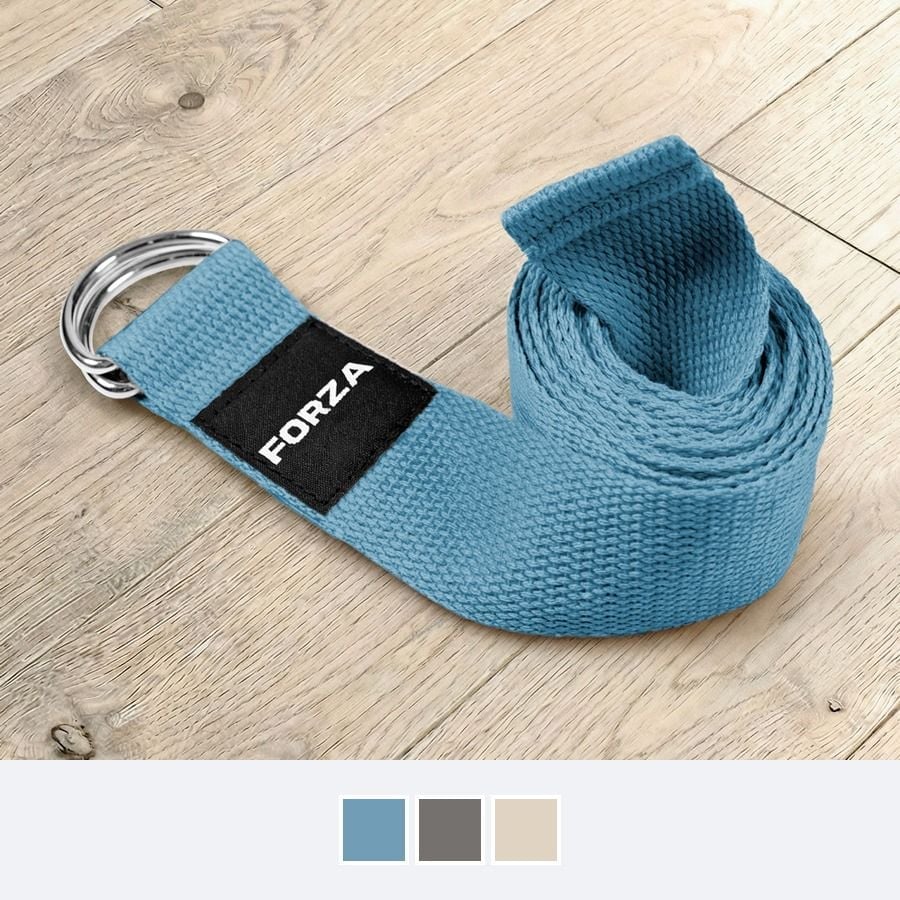
Straps come in different lengths. Shorter ones around 185cm (6ft) work great for basic stretches. For most single poses, 6ft (185cm) is the perfect length - but it can depend slightly on how flexible you are.
Longer yoga straps - typically 8ft (250cm), let you loop them around your feet for example, and still have significant length to hold. FORZA offers 8ft (250cm) straps which give you plenty of room for different techniques and are suitable for a wide array of body shapes and sizes. Longer straps can help if you are a beginner or less advanced in terms of flexibility.
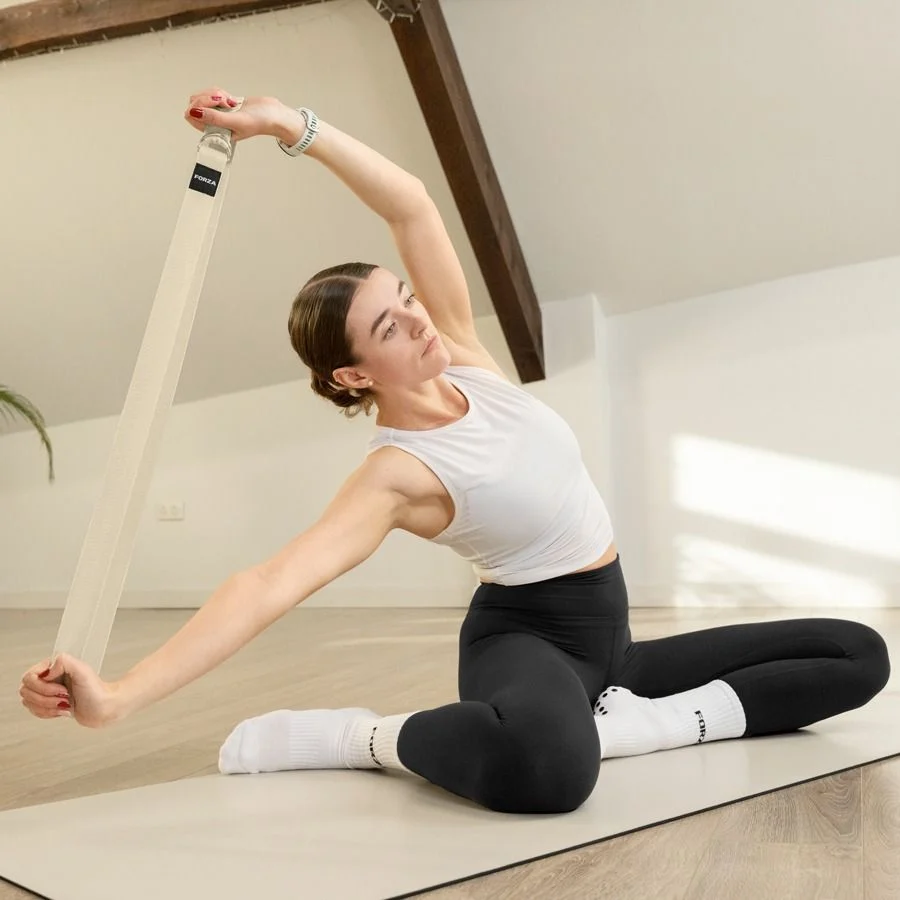
For example, if you are tall or have particularly tight hamstrings, the extra length means you are not straining to reach the strap - often an issue if you are trying to hold a Seated Forward Bend (Paschimottanasana). Longer straps also let you get somewhat creative with your holds and poses. You can make loops of different sizes, wrap them multiple times for adjustable resistance, or use them in partner stretches. You can always shorten a long strap by adjusting where you hold it.
Where Straps Transform Your Practice
Hamstring stretches become accessible to almost everyone when you use a strap. Lying on your back with the strap around your foot, you can straighten your leg properly instead of keeping it bent because you cannot reach and grab or touch your toes. Practitioners can perform the stretch correctly, instead of a bent leg version that does not target the hamstrings as effectively.
Shoulder stretches benefit hugely from using straps too. For beginners, trying to clasp your hands behind your back is a position most people are not able to reach. A strap bridges the gap. You still get the shoulder opening and stretching without forcing a grip your body is not ready for. This makes the practice more rewarding and safer.
Seated forward folds (touching your toes whilst sat on the mat) with the strap around your feet, let you "hinge from your hips". Keeping your back in a natural position, even if you have really tight hamstrings you can pull yourself forward without straining and pulling yourself downwards and rounding your back. The difference in how it feels is enormous. It is also much safer and more effective for relaxation and improving flexibility.
Some people use straps for supported balance poses too. Loop it around your foot in Extended Hand to Big Toe (standing on one foot with the free leg held out straight to the side) and you can work on the balance and hip opening without the flexibility challenge at the same time.
| FORZA YOGA STRAPS | |
|---|---|
| Product | Key Features |
| FORZA Yoga Strap 6ft or 8ft | Cotton strap with metal D rings for secure holds |
| METIS Yoga Strap Belt | Simple affordable stretching support |
Resistance Bands for Yoga
A popular sight in home and commercial gyms, resistance bands can be a valuable tool for supporting yoga progressions, mobility work, and strength focused poses. Unlike yoga straps, resistance bands provide elastic tension. This allows for controlled movement and assistance through a wider range of positions.
It is the ability to stretch, that makes bands particularly useful for building stability and functional strength. Lighter resistance levels allow joints and muscles to move more freely. They can offer support in vulnerable 'outstretched' positions while still encouraging active engagement.
Another benefit of resistance bands is adjustable/variable resistance. By changing how the band is anchored, shortened, or looped, a single band can offer multiple resistance levels. Choosing different thicknesses or resistance strengths further expands this range of resistance on offer. This allows bands to be used for different exercises and completely different modalities, like mobility, strength or power training.
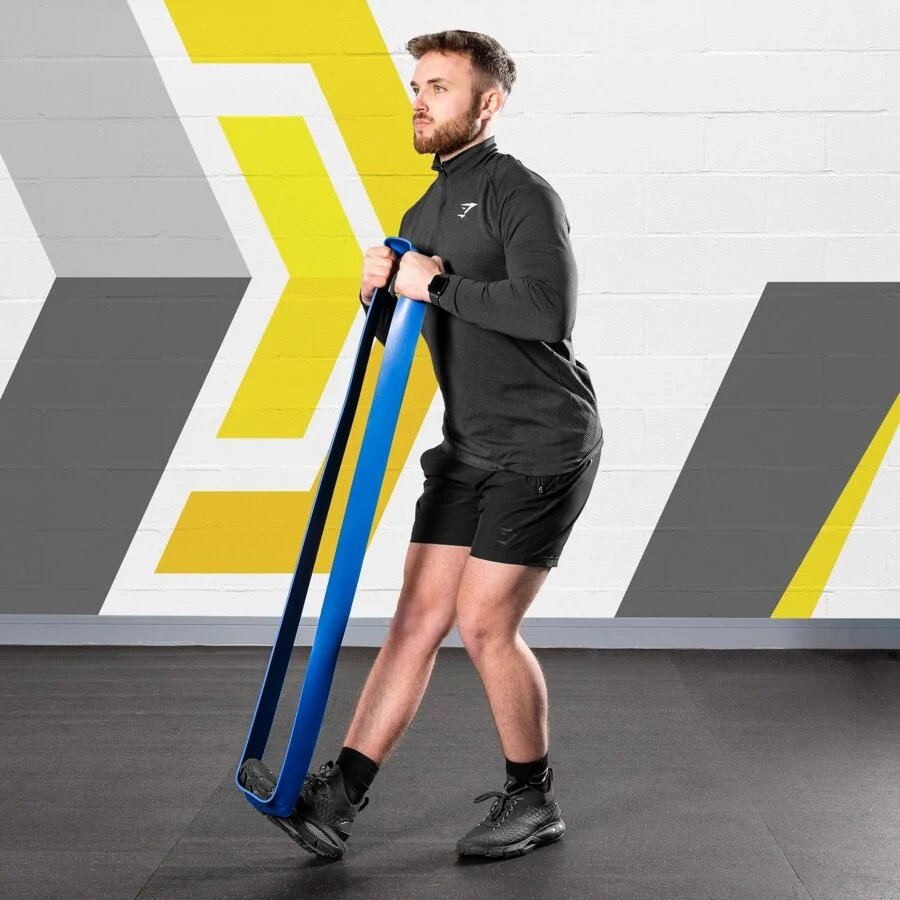
Long loop style resistance bands like the FORZA Power Bands, are especially versatile for yoga and mobility work. They can be used to assist balance poses when securely anchored, support dynamic warm ups with progressive resistance, or add gentle resistance to flowing movements. For example, a light band held slightly wider than shoulder width can support arm circles and shoulder mobility work, while looping a band around the foot when lying supine (on your back) can assist with hamstring stretches.
Looped latex resistance bands, available in multiple resistance levels, are designed to maintain consistent stretch while remaining durable over repeated use. As with most resistance based training protocols and tools, bands should be used with slow, controlled tension. Selecting an appropriate resistance level and maintaining focus through each movement helps ensure safe, effective progression.
| FORZA Resistance Bands | |
|---|---|
| Product | Key Features |
| FORZA Resistance Bands Pack of 4 | Multiple resistance levels for mobility and activation |
| FORZA Power Bands | Long loop bands for assisted stretches and strength work |
| FORZA Pulley Resistance Bands | Handled option for upper body strength and posture |
Yoga Wheels for Deep Backbends
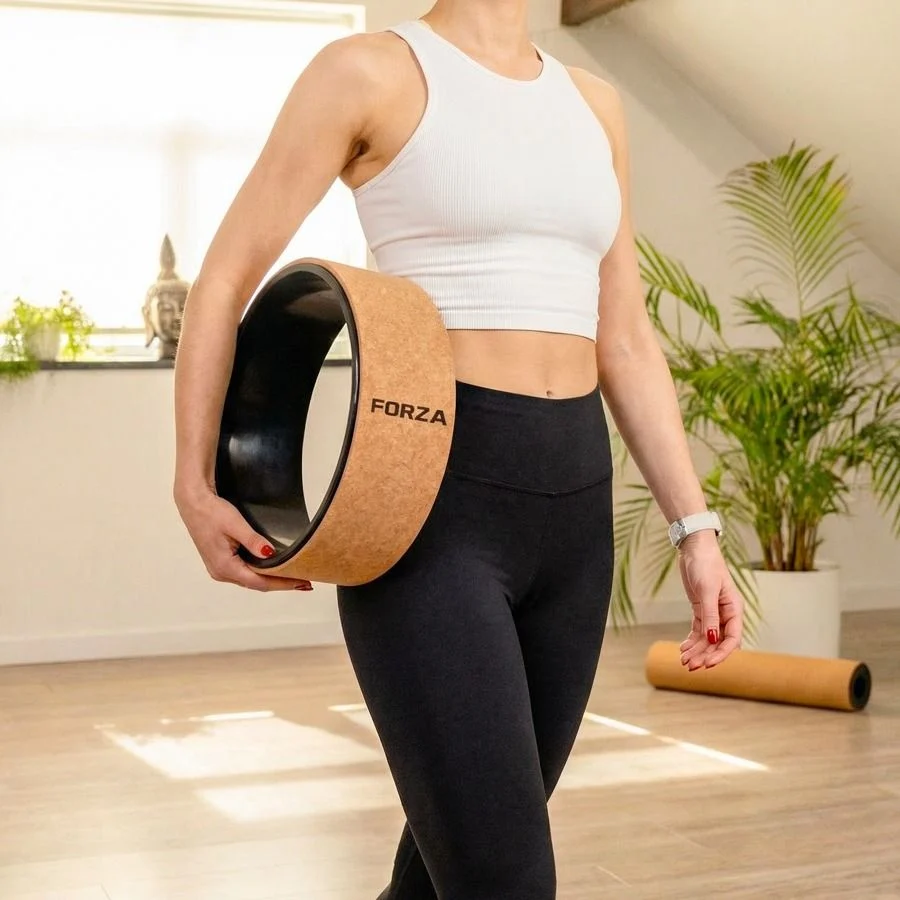
Yoga wheels can be described as circular props for backbends and other deep stretches. If you have tight shoulders, hips and/or lower back, you may wish to consider buying one. If you specifically want to work on back stretches, then start slowly and carefully. Ideally with a professional instructor supervising. The deep backbends that they allow, can be especially helpful for people who sit for long periods. Just start slowly and consult a professional if you are unsure of anything. The back and spine are delicate so slow and steady is the way.
What Yoga Wheels Do
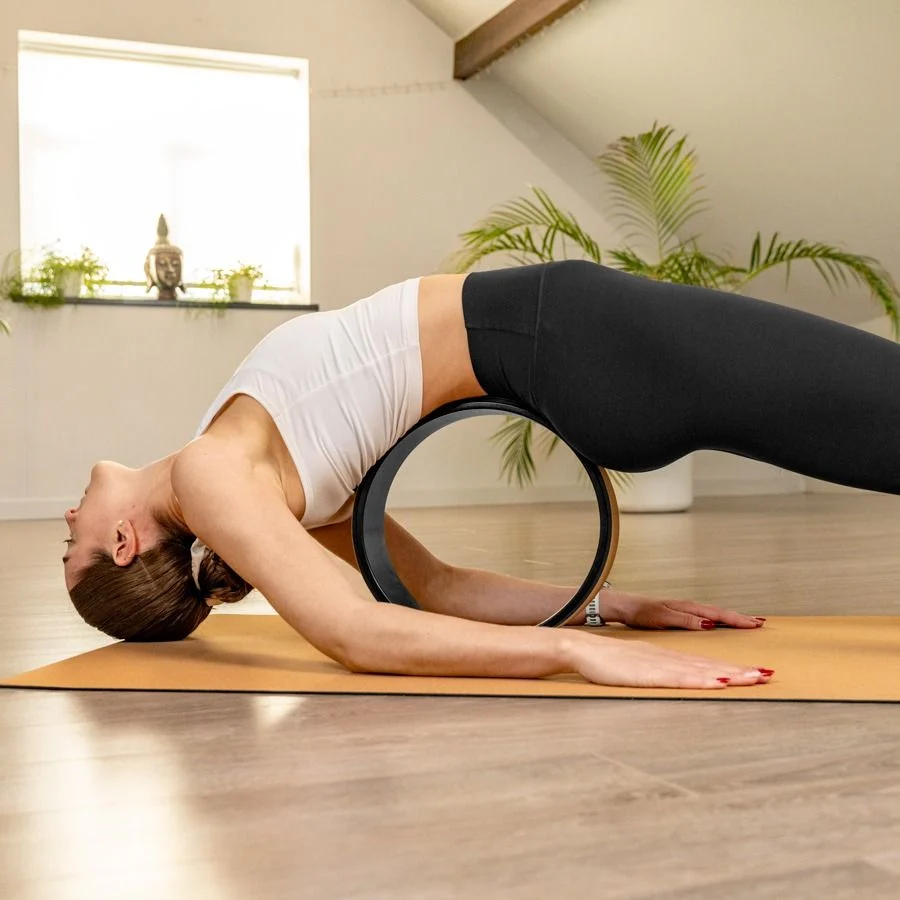
A yoga wheel supports your spine in backbends. Yoga wheels let you arch further than you could unsupported. You lie back over it and the curve deepens your extension. As you get more flexible, you can move it to different points along your spine for varied stretches. Being able to arch and hold the position for longer periods, could also help with "spinal decompression". Whilst the research on the benefits of spinal decompression is limited, it does seem to offer at least some temporary relief for people suffering with certain lower back and neck conditions.
Beyond backbends, yoga wheels also work for core strengthening. Balancing on the wheel while rolling forward and back engages your abs, hip flexors and inner core muscles. Some people use them for assisted balance poses or as a rolling massage tool for tight muscles. Known as "myofascial release", yoga wheels can be used to target knots and tight muscles, to provide pain relief and as a warm up before stretching. There is a growing body of research showing that myofascial release combined with stretching, can be effective for tight muscles and lower back pain.
Do You Need a Yoga Wheel?
If you practice regularly and want to progress your backbends beyond what blocks and bolsters offer, a wheel gives you new options. In addition if you sit at a desk at work all day, or generally sit for long periods, spending a few minutes per day in a back bend position can be highly beneficial. The 'slightly upside down' position can help with lymphatic drainage of the upper body too. For general practice, blocks and straps will most likely serve you better.
That said, if back flexibility is a specific goal, wheels can help you achieve deeper extensions safely. Just do not feel you need one to have a complete practice. They are relatively inexpensive too, so it can be a wise investment into your wellbeing programme, especially if you have a tight back, shoulders and/or neck.
| FORZA Yoga Wheels | |
|---|---|
| Product | Key Features |
| FORZA Cork Yoga Wheel | Natural cork feel with premium grip for backbends |
| METIS Yoga Wheel | Affordable wheel for backbend support |
Yoga Recovery Equipment
Some forms of yoga, by their nature are relaxing and additional recovery exercises might not be required. However, some more strenuous forms of yoga, for example Ashtanga yoga, can cause lots of muscle soreness (and growth) especially when you are a beginner. After your first session, your body may actually feel very stiff. If you are not used to stretching through certain ranges, your body will often try and protect itself by engaging in "protective muscle tone" - also known as "muscle guarding". This is normal and is the body's way of protecting your body until it gets accustomed to your new yoga regime.
Yoga recovery tools, including massage balls and foam rollers, are great for anyone who sits down for long periods, and/or has stiff muscles. This type of equipment helps to improve circulation, reduces muscle stiffness and can help alleviate tension in problem areas. For example, if you have a knot in your glute, or particularly tight hamstrings, then using a foam roller and massage ball before you stretch and do yoga can be beneficial.
Foam Rollers and Massage Balls
Whilst a foam roller applies broad pressure across a relatively large surface area, massage balls can be used to target specific spots of tension. Studies demonstrate that slow rolling across the hamstrings (back of thighs) and quadriceps (front of thighs) alone can actually increase flexibility. Done correctly, the muscles should relax and therefore be easier to stretch over a given range of motion.
Massage balls provide more targeted pressure. The small size allows you to target small areas of tension and knots that are often found in the glutes, hips, back and neck. Used together they form a complete system for optimising your flexibility and recovery. You can use this equipment as a short warm up and cool down before and after yoga, or every day, after work for example, for 10-15 minutes to relieve temporary tension after a long day of sitting or physical activity.
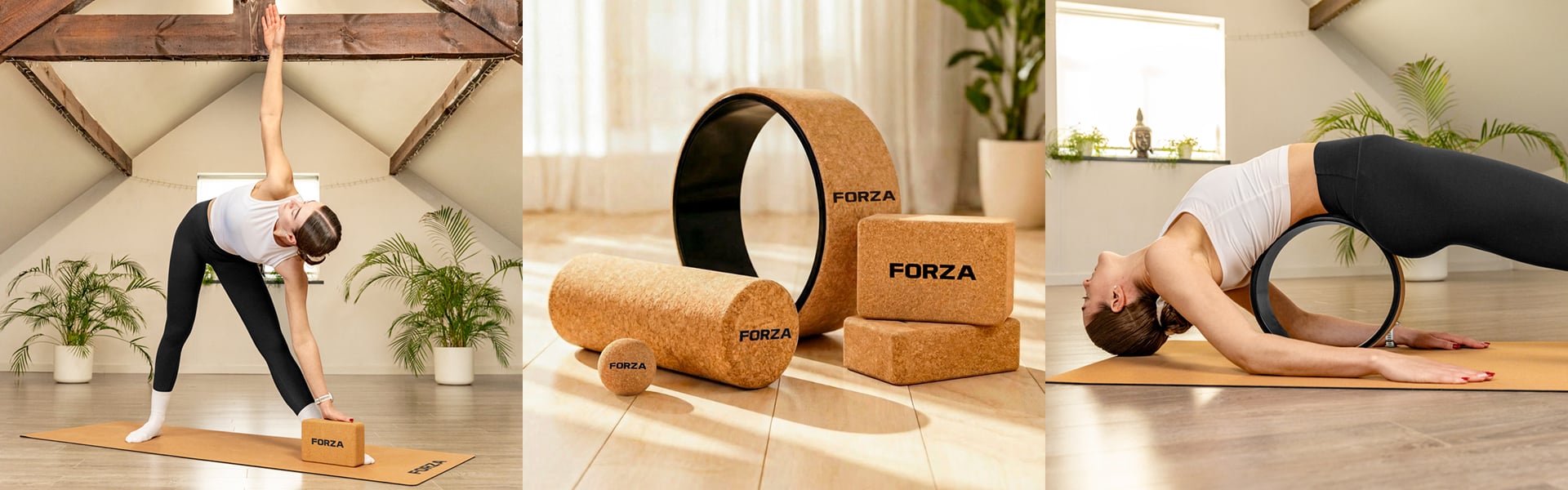
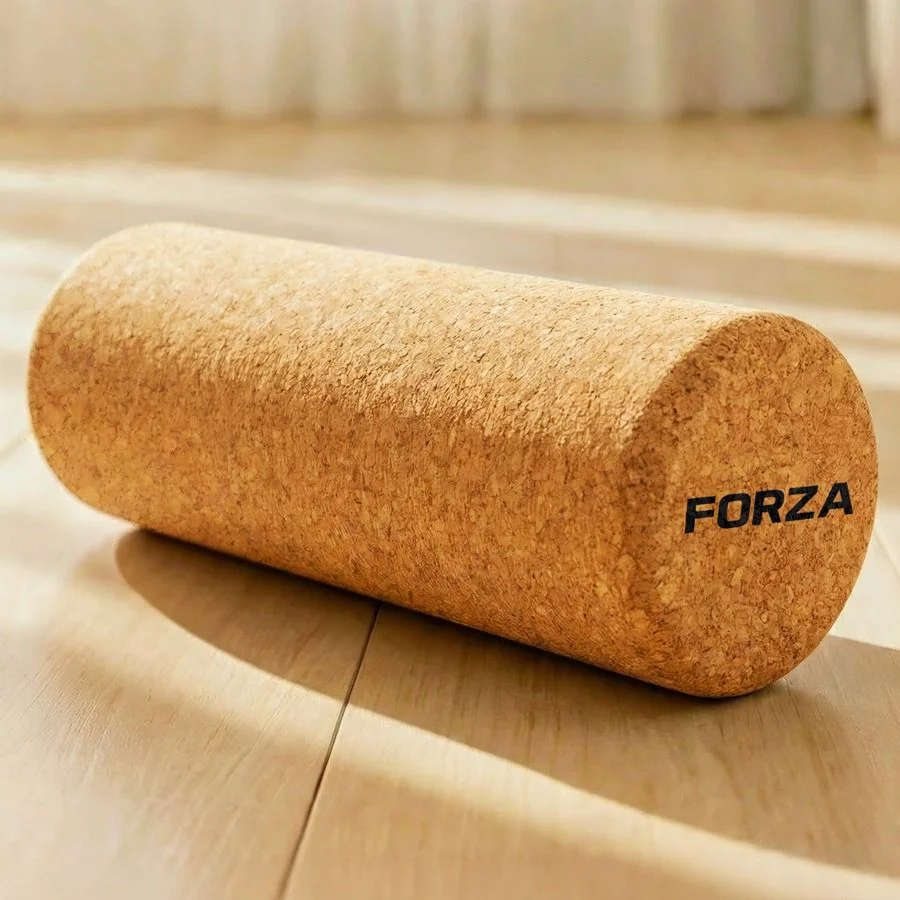
Cork rollers and balls provide a firmer, more stable feel than foam equivalents. The FORZA Yoga Cork Recovery Bundle combines a high density 30cm cork roller with two compact 5cm cork massage balls. The sustainable natural cork provides a stable, tactile grip and firm, controlled pressure. Cork is naturally antimicrobial, odour resistant and free from harsh chemicals. Lacrosse massage balls are also highly effective. Made of solid vulcanised rubber, lacrosse balls are firm with zero "give".
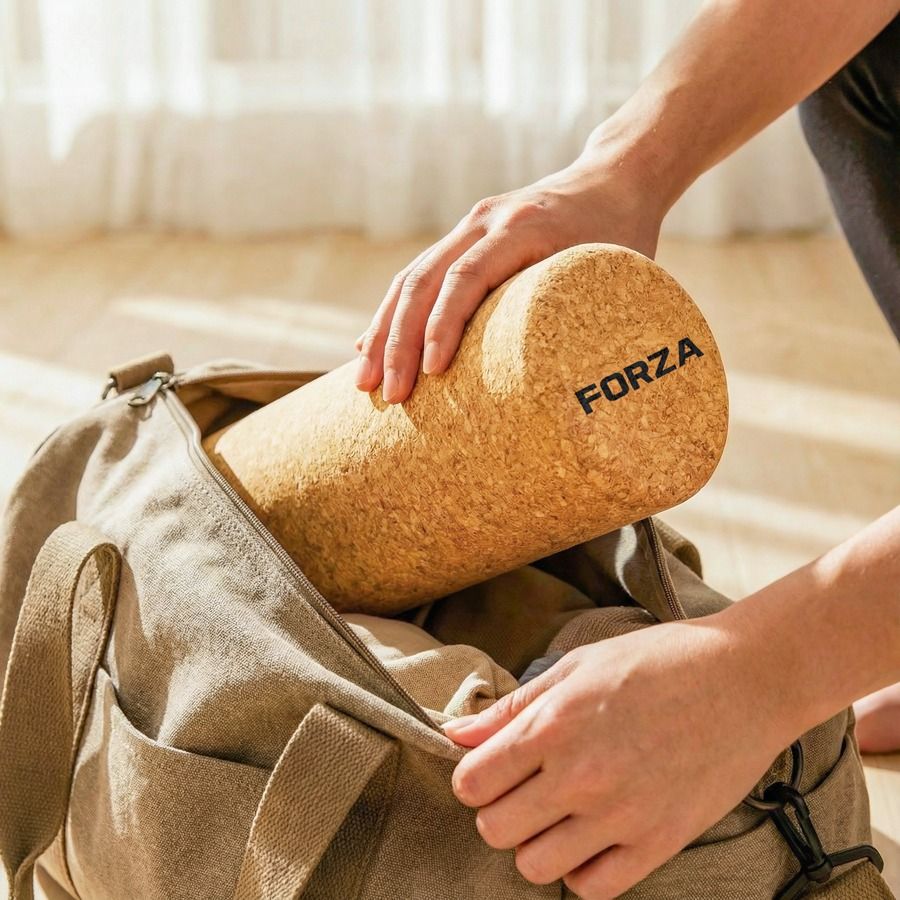
If you are able to obtain both at an affordable price, cork massage balls can be used for more tender and sensitive areas near the neck for example, whilst a lacrosse ball can be used for 'deeper' work in the glutes or thighs.
Key Benefits of FORZA Yoga Rollers & Balls
- Support deep muscle release and everyday mobility
- Improve circulation and reduces stiffness between sessions
- Targets both large muscle groups and precise trigger points
- Hygienic, sustainable and long lasting natural cork
- Suitable for yoga, Pilates, running, rehab and gym training
When to Use Recovery Equipment
As mentioned above, despite the name "recovery", you can use rollers and massage balls shortly before a yoga session, to relax areas of tension. There is also some evidence to suggest that using a foam roller and/or a massage ball after a practice or gym session to relax muscles and support recovery can be very beneficial. It is also common for people to use recovery tools once or twice daily to maintain flexibility and prevent additional muscle tension and postural inefficiencies from arising. For example, if you are hunched over a laptop all day, using a foam roller to massage the back and lower neck, and to hold upper body stretches on, can provide relief and help you to maintain correct posture and head/neck alignment.
If flexibility, comfort in poses or general muscle tightness is a challenge for you, adding recovery tools to your kit can make a noticeable difference to how your body feels and how freely you move. Balls and rollers are used by many athletes and by the general population - specifically for "trigger point therapy". A trigger point is a tightly contracted area of muscle fibres - sometimes described as a "micro-cramp". This contraction can restrict blood flow, cause pain and create compensatory movement patterns that cause issues elsewhere in the body. Using a ball or roller on the area helps to increase "ischemic compression" - applying direct pressure to an area to reduce blood flow, then releasing it for "reperfusion" (restoration of blood flow). Nobody is actually 100% sure why, but this helps to alleviate pain and in some instances, completely remove muscle knots when done on a daily basis as part of a training programme or rehab programme.
Finally, one major benefit of using a foam roller, is that unlike static stretching, it increases flexibility and range of motion immediately after use, without a temporary weakening of the muscles. It is therefore ideal for warming up before doing sport, or a gym session. The fact that recovery tools can quickly relax muscles and make them more flexible, makes their use before yoga very beneficial too.
| FORZA Recovery Tools | |
|---|---|
| Product | Key Features |
| FORZA Cork Massage Ball | 5cm natural cork ball for precise trigger point release |
| FORZA Cork Roller | 30cm solid cork roller for deep muscle release & mobility |
| FORZA Massage Ball | Solid rubber ball for myofascial release & workout recovery |
Yoga Balance Equipment
Balance is a core component of yoga. Whilst the ancient yogis of India probably didn't use balance boards, they are still very useful for modern yogis. Any tool that can help you progress in terms of your ability to control your body through extended movements, and hold a pose on one leg, or on one arm - will transfer and directly help your yoga poses and balances. Balance and core strength is also an essential skill and ability for everyone from pro-athletes to elderly citizens to develop and maintain for better performance, injury prevention and mobility in general life.
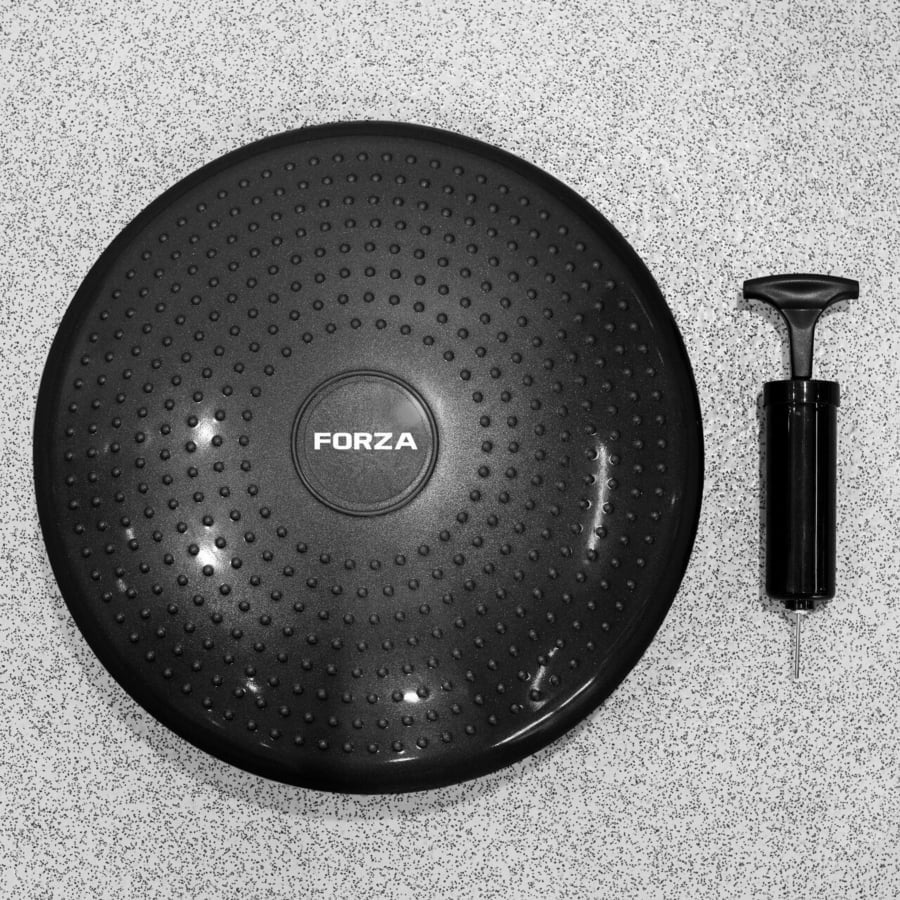
Great value, balance cushions are accessible and highly effective. The cushions create subtle, unpredictable movement underfoot or under the hands which force stabilisation muscles, and often core muscles to engage. Performing press ups with your hands or feet on one or more balance cushions for example, can create a highly effective balance and core strength exercise. Yoga and stability balls can be used in a similar manner. From planks, to press ups, they are excellent for turning standard exercises into balance and stability training. Be careful when you first use them, it is easy to fall. If you try and perform a lunge on a balance cushion for example, the first time will likely be a 'very wobbly' experience, so be careful you don't fall over or hurt your knee or ankle.
Some people prefer static exercises - sitting, kneeling or standing on unstable surfaces offered by cushions and balls. As mentioned above, be careful when you first attempt any balances, in case you fall over. Just sitting on a yoga ball for example, forces the user to make constant micro-adjustments to keep their balance. You will use lots of small, important muscles that are often missed if you practice mainly floor-based yoga.
It may also be easier to work sitting on a ball or cushion into your daily routine. If you work from home for example, you could spend a set amount of time per day sat at your desk on a yoga ball, or kneeling on a balance cushion.
Wobble boards are designed for and more generally used for knee, ankle and hip rehabilitation programmes. Wobble boards too, can be a fun tool for improving your balance and injury proofing your ankles and knees. Standing on one for a few minutes per day is enough for most people, to develop strength and balance in the ankles within a month or two.
| FORZA Balance Equipment | |
|---|---|
| Product | Key Features |
| FORZA Balance Cushion | Unstable surface for core engagement and stability work |
| FORZA Wobble Balance Board | Great for ankle knee and hip stability training |
| FORZA Anti Burst Yoga Ball and Pump | Full body balance work includes pump |
| FORZA Pilates Ball | Targeted core and mobility exercises |
Yoga & Pilates Equipment
Yoga and Pilates share some common themes. They both emphasise controlled movement, posture, core engagement and breath awareness. Pilates places more emphasis on controlled strength especially through deep core muscles that stabilise the spine and pelvis. Pilates equipment such as Pilates bars can complement your yoga routine. The portable bar allows you to perform a wide range of exercises that can help you to develop the hip and shoulder strength required for poses like Warrior III and Chaturanga.
Pilates rings (sometimes called "magic circles") are excellent tools for targeting smaller, often neglected muscle groups used to squeeze objects between your hands, thighs and ankles. They are particularly good at targeting and building hip adductor and abductor strength, which improves poses like wide-legged forward folds.
| FORZA Yoga and Pilates | |
|---|---|
| Product | Key Features |
| METIS Pilates Bar | Portable strength work for shoulders hips and core |
| FORZA Pilates Ring | Adductor and abductor targeting for hip control |
Matching Yoga Equipment to Your Practice Style
Different yoga styles need different kit. What works for hot yoga might not be so good for your yin yoga class, and vice versa. The table below provides a quick overview of the demands of each practice and how that impact equipment design and choice.
| Matching Equipment to Your Practice Style | ||
|---|---|---|
| Practice Style | Essential Equipment | Notes |
| Hot & Power Yoga | Grippy mat, towel, water bottle | Props minimal, focus on mat grip |
| Gentle & Restorative | 2+ blocks, bolster, strap, blankets | Props earn their keep here |
| Yin Yoga | Blocks, bolsters, blankets, strap | Comfort determines success |
| Vinyasa & Flow | 1 to 2 blocks, optional strap | Keep it simple, minimal props |
| Outdoor Practice | Blocks, strap, blanket | Keep it light and portable |
Hot and Power Yoga - Props are minimal with these yoga styles. You will sweat lots. Have a towel handy and maybe a block for occasional use. A water bottle is essential. Beyond that, this style is mostly about your mat and your effort.
Gentle and Restorative Yoga - This is where props earn their keep. You will normally use two blocks minimum. A strap helps you ease into stretches without jerking. A blanket or two for extra support and warmth.
Yin Yoga - Similar to restorative but the holds target deep connective tissue. You need blocks to support joints and for longer holds, and blankets for comfort. A strap helps you find the right depth in stretches without muscular effort.
Vinyasa and Flow - One or two blocks cover most needs. A strap occasionally. You are moving through poses fairly quickly so you do not need the extensive propping of slower styles.
Outdoor Practice - Bring what you need but keep it light. Blocks and a strap pack easily. A bolster is bulky for outdoor sessions unless you are driving and setting up camp somewhere. A blanket to sit on protects you from damp grass and doubles as a prop.
Avoiding Common Buying Mistakes
It is easy to spend money quickly on yoga equipment. Here is what to look out for when you decide to invest...
Buying Everything at Once - You do not need every prop on day one. A good starting point might be a mat with blocks. Add a strap if certain poses are just out of your reach. Get the basics and then build your equipment collection based on what your practice would directly benefit from.
Buying on Price Alone - It is best not to automatically assume that the most expensive yoga gear is the best. There are plenty of designer brands but high quality yoga equipment, that does exactly the same job and very often has the same design and manufacturing specification, can normally be a lot more affordable. At Net World Sports, our yoga mats, blocks and straps are manufactured to professional standards but without the designer markup.
Ignoring Build Quality - Check dimensions look correct, the weight is about right and the best materials are used before you make a purchase. Look for mats with non-slip grips, and blocks made from sustainable cork or EVA foam. At Net World Sports, our products feature this attention to detail, backed by clear specs to help you choose confidently.
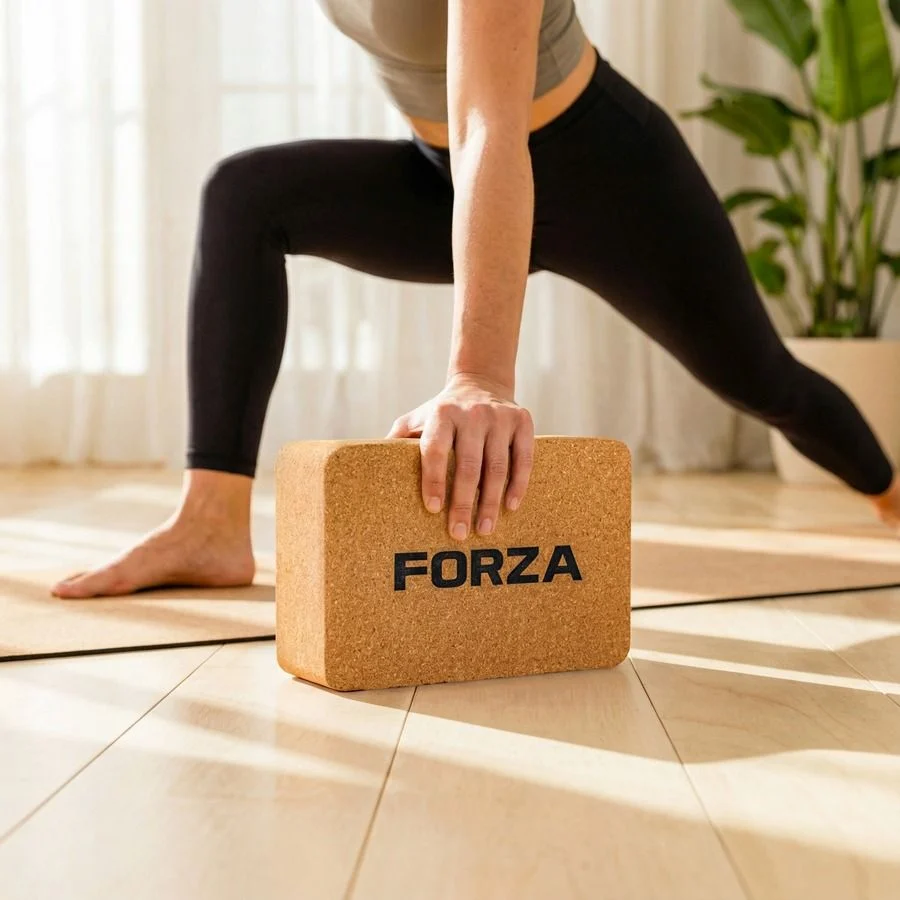
Forgetting About Storage - Props take up space. Think about where you will keep them before you buy any. Blocks stack neatly and straps roll up small. A storage basket or shelf keeps everything tidy and means you are more likely to practice because your gear is organized and ready. In fact, in the bestselling book Atomic Habits by James Clear, the author explains that habits are not just about motivation, they are also influenced by how easy or hard an action is to begin. The more steps, effort, or inconvenience involved, the more friction exists. If you are looking to adopt a new home yoga training schedule, make all of your equipment as easy to access as possible. If you have space, you could even leave your mat and blocks out all the time.
Not Considering Transport - If you go to classes, weight matters. Carrying lots of equipment across town can feel like a big effort sometimes. Think about the weight of the equipment and props, and how you will transport them. You might need a yoga carry strap and/or a new sports bag for example.
Yoga Equipment FAQs
What equipment do I need for yoga?
The only, or at least the most "essential" piece of equipment for yoga is a yoga mat. If you go to a class, you can sometimes borrow one, but for hygiene reasons most regular practitioners invest in their own. Props like yoga blocks, straps, and bricks can help support your practice. Many people also find a towel and a water bottle are the two most important items, especially for hot yoga.
Where can I buy yoga equipment?
Yoga equipment is available from Net World Sports. For quality mats, blocks, bricks and even foam rollers and trigger point massage tools, look no further than our range of yoga equipment.
How do I store yoga equipment?
Roll your yoga mat loosely with the top surface facing outward to prevent curling the edges. Store the mat in a cool, dry place away from direct sunlight. Yoga blocks and straps can be kept in a basket or on a shelf. If space is limited, a wall-mounted mat holder or yoga bag keeps everything organised and accessible. Ideally all of your equipment should be stored in a cool, dark, well ventilated area.
How do you use yoga blocks?
Yoga blocks bring the floor closer to you, making poses more accessible. Place them under your hands in standing forward folds, beneath your hips in seated poses, or between your thighs to engage your inner legs. They can be used on three different heights - depending on how you place the block, and how much support you need.
What are yoga blocks used for?
Yoga blocks are used to provide support, improve alignment, and make poses accessible for all levels. The main way they help, is to allow practitioners to reach the ground in poses where flexibility is limited and they can't quite reach the ground. Blocks also support restorative poses allowing poses to be held for longer periods.
Are all yoga blocks the same size?
No, yoga blocks come in different sizes. The standard size is 23cm x 15cm x 7cm (9in x 6in x 3in), but larger and smaller options exist. The FORZA Cork Yoga Blocks are 23cm x 15cm x 7cm, whilst the EVA Foam Blocks are 30cm x 20cm x 5cm (12in x 8in x 2in). Bigger blocks offer more stability, while smaller ones are easier to grip. The size you choose depends on your hand size and what you'll use them for.
Are cork yoga blocks better than foam?
Cork blocks are heavier, more stable, and eco-friendly. This makes them ideal for eco-conscious practitioners and for long-term use. Foam blocks are lighter, softer, and usually more affordable. They both do pretty much the same thing, the feel and the sustainability is the main difference.
Are yoga blocks necessary?
Yoga blocks aren't essential, but they're very useful. If you want to perform a wide range of poses safely, they are especially useful for anyone with low to mid-range flexibility. They help you maintain proper alignment without straining, making poses safer and more effective. Most yoga teachers will recommend having at least one block - even if you use it just at home to experiment with different poses outside of an actual class.
How much does a yoga block weigh?
Foam yoga blocks typically weigh around 100-200g (3-7oz), while cork blocks are heavier at 400-900g (14oz-2lb). The weight (as well as the size), affects stability. Heavier blocks will tend tor remain in place better during practice, while lighter blocks are easier to transport.
How do you use a yoga strap?
You will normally hold a yoga strap with both hands and loop it around one or both feet. For example, loop a yoga strap around the bottoms of your feet in seated forward folds to extend your reach, or use it to bind your hands behind your back in shoulder stretches. Straps help you hold poses longer without straining and gradually improve flexibility over time. Adjust the length using the buckle or D-ring.
How can I improve my balance in yoga?
Focus on a fixed point (called "drishti" in Sanskrit) to steady your gaze, engage your core, and spread your toes to create a stable base. Start with beginner balance poses like Tree Pose and progress gradually. Using a wall, a partner, or an anchored band for support can help you to build confidence as you develop stability.
Caring for Your Yoga Equipment
Good maintenance and cleaning of your yoga equipment should extend its life and keep it looking at its best, and smelling pleasant (or at least neutral) for longer.
Always follow the manufacturer's instructions.
Regular Cleaning - Blocks need a wipe when they get grimy but a quick wipe after each class is a good routine to start. A damp cloth with a drop of mild soap should be enough to remove any sweat. Avoid soaking foam blocks, just wipe the surface. Cork is naturally anti-microbial but you should still give any equipment a quick wipe with a damp cloth after a session. Check the manufacturer's instructions, some straps should go through the wash every month or so depending on use, whilst others need soaking and air-drying out of direct sunlight.
Storage - As mentioned above, keep everything in a dark, cool, well ventilated area when in storage. Unless you have your own dedicated yoga-area, in which case you may want to leave it out all of the time to help you enjoy spontaneous sessions and one-off poses.
Inspection - Most blocks will last for years, but check them for cracks or crumbling edges. If a block feels unstable when you put weight on it, you should probably replace it. Strap stitching frays eventually, especially at the D ring attachment. Run your fingers over the attachment area every few months to check for any signs of weakness or damage.
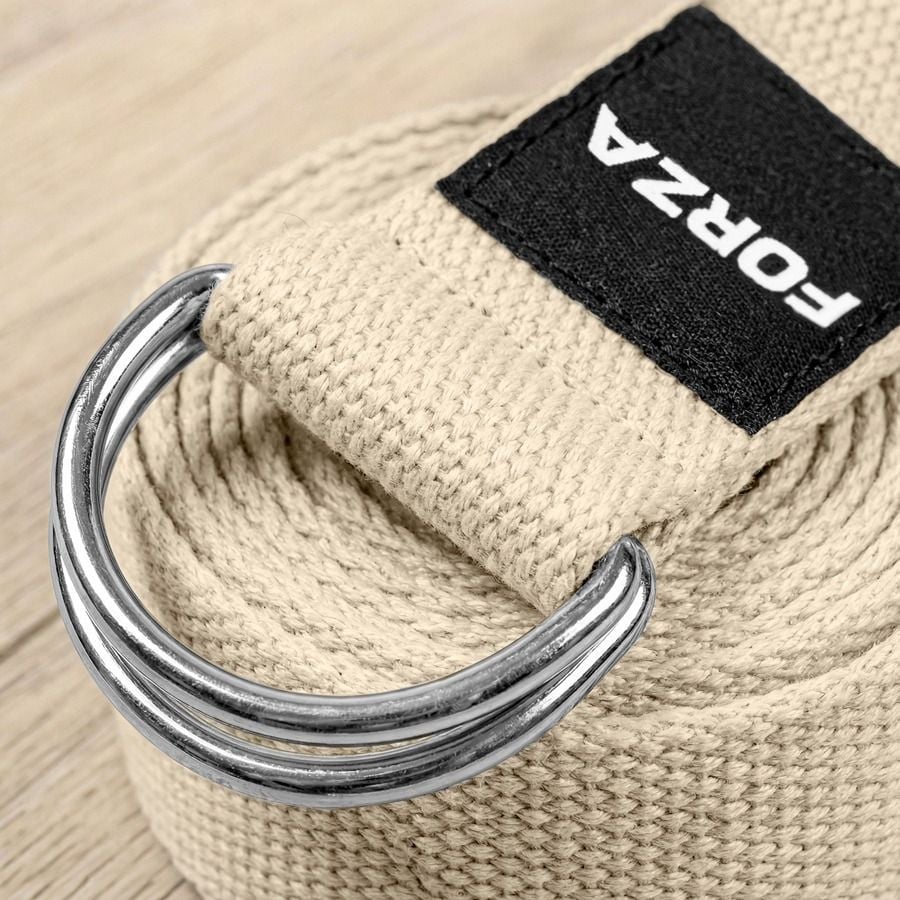
When to Replace - Blocks and straps should last 2-3 years or more. The metal D rings outlast the webbing on straps normally. Mats should also last several years. The main variable in terms of longevity will be how well you clean and store your yoga equipment after use. If you use a block daily and leave it in the car boot all the time, its longevity will decrease substantially.
Making Your Decision
Yoga is beautiful, in that it is simple. It can be performed anywhere you have a bit of space and a flat, clean floor. However, thanks to the ever increasing range of fitness and yoga equipment available online and on the high street, finding the right yoga equipment can feel overwhelming. Hopefully this guide has already narrowed things down a bit to make your informed purchases easier.
With many options and styles, each product will tend to have some specific pros and cons. Some yoga equipment brands will also look to focus on comfort, others on durability, sustainability or portability. Knowing what matters most helps you invest wisely. Whether you practice at home, in a studio, or outdoors, your equipment affects your safety, performance, and enjoyment.
In addition, knowing what your goals are, and what style of yoga you are doing will also help you to narrow down your choice of equipment.
Key Takeaways
- Quality yoga equipment promotes safe and effective practice.
- The main benefit of most equipment is hygiene (using your own gear), and injury risk mitigation/reduction.
- Consider your style, location (home or commercial gym etc), and practice frequency.
- Blocks and straps can help you to perform additional poses by helping you 'reach' the floor or your toes.
- Consider size, weight and if you need a carry strap and/or a bag if you travel to a gym.
- Proper equipment can improve posture & help you align your body correctly.
- Start with the basics (mat, blocks, strap) and build from there.
Net World Sports Yoga Equipment Range
At Net World Sports we offer an extensive range of yoga gear to suit all requirements and budgets. If you're looking for a complete bundle to get started, our yoga set includes everything you need. With a yoga mat, yoga belt, carrying strap and 2 yoga blocks, you have everything you required to take your yoga asanas to the next level.
As well as yoga sets, we also stock a wide range of yoga equipment and accessories including yoga wheels, yoga blocks and yoga balls. All of our yoga equipment is made from the highest quality materials and is designed by our inhouse UK team.
Yoga is a great form of exercise that can be done pretty much anywhere. It is fantastic for relieving stress, improving flexibility, bone density, balance and strength. Investing in a yoga mat is a smart move that will certainly help you to improve your health and wellbeing (as long as you use it!). To view our full range of yoga mats and accessories, including yoga bands and straps, visit our yoga equipment page.
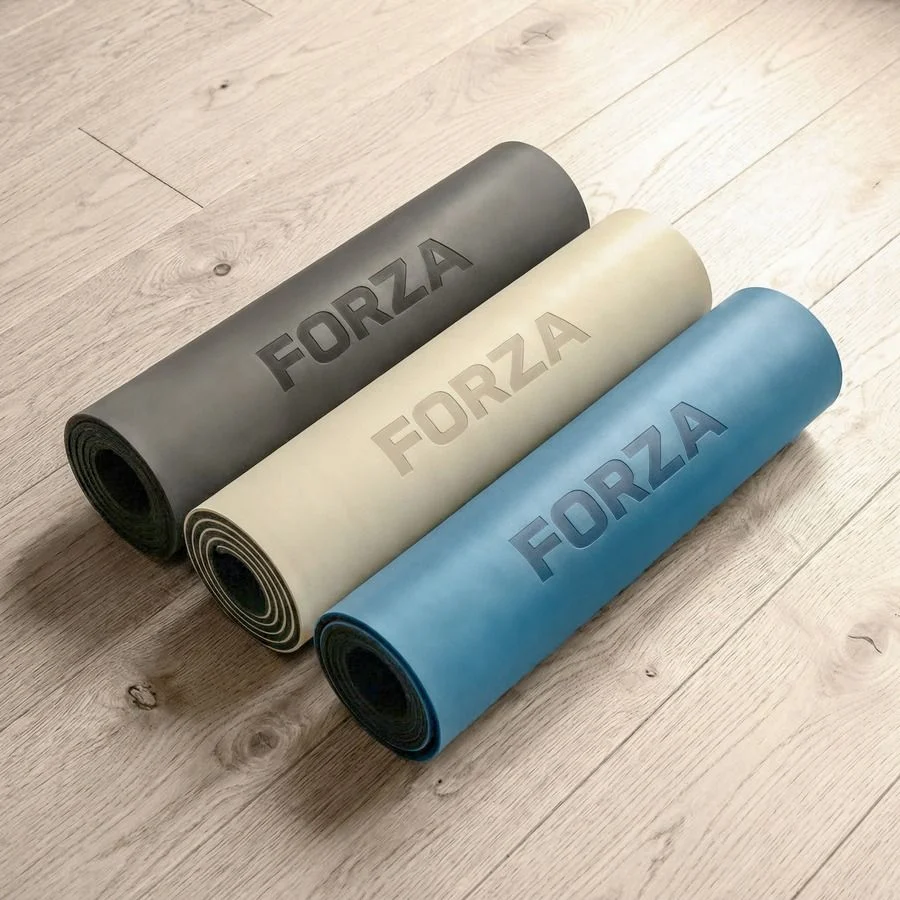
- 30cm x 20cm x 5cm
- High-density EVA foam for lasting shape & support
- Bevelled comfort edges for smooth hand placement
- Soft matte texture for secure, slip-resistant grip
- Available in 3 calming colours: Slate Blue, Charcoal, or Beige
- Backed by a 12-month warranty

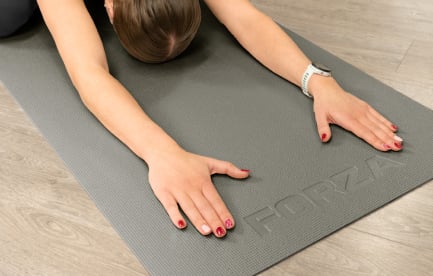
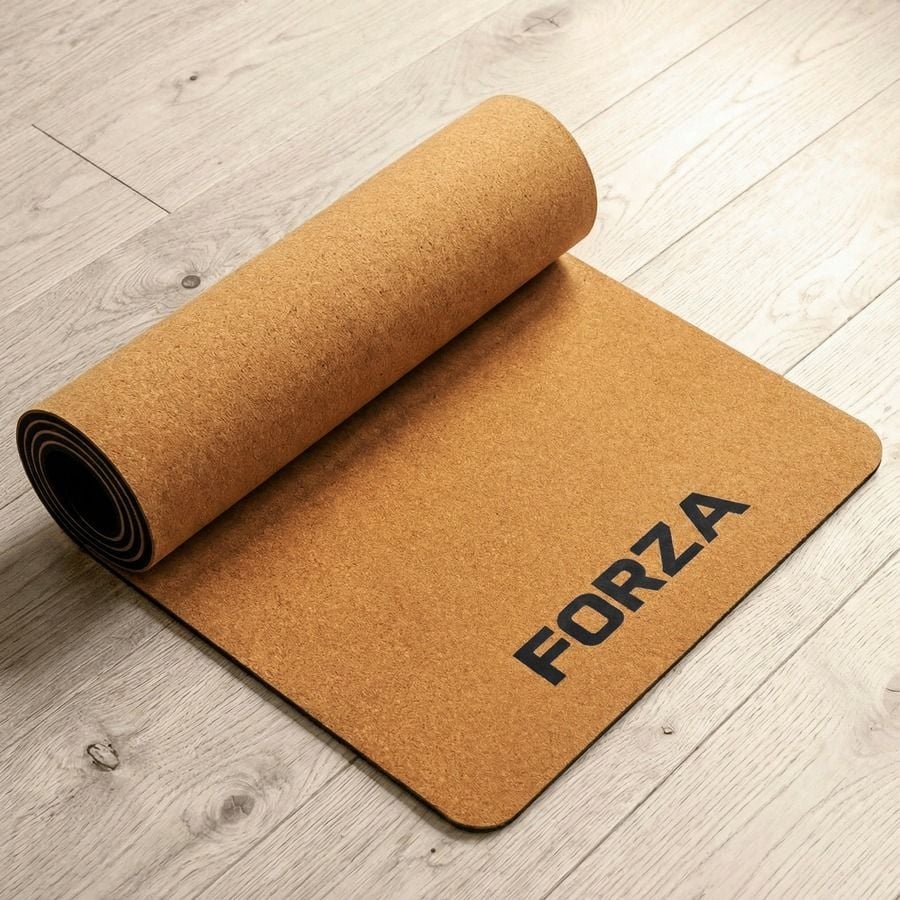
- Made with ecological polyurethane and natural rubber
- 183 cm long and 68 cm wide
- Non-slip polyurethane (PU) top layer
- Natural rubber base for cushioning, stability & durability- contains latex
- Non-slip surface
- Backed by a 12-month warranty
- Natural fine-grain cork surface
- Antimicrobial cork surface that resists bacteria, moisture & odours
- Anti-slip natural rubber base for stable, long-lasting support - contains latex
- Textured surface provides a reliable grip throughout every session
- 4mm unfolded thickness
- Backed by a 12-month warranty
- Diameter: 32cm | 13in
- Width: 13cm | 5in
- Weight: 1kg | 2.2lbs
- Natural fine-grain cork exterior- dense, durable & sustainable
- Antimicrobial exterior naturally resistant to moisture & odours
- Backed by a 12-month warranty

- Length: 30cm | 12in
- Weight: 800g | 1.8lbs
- Natural fine-grain cork - dense, durable & sustainable
- Natural fine-grain cork exterior- dense, durable & sustainable
- Perfect for yoga, Pilates, mobility & recovery sessions
- Backed by a 12-month warranty
- Six-piece cork bundle for yoga
- Fine-grain, dense cork delivers a smooth feel & lasting durability
- Natural fine-grain cork - dense, durable & sustainable
- Sustainably sourced cork
- Natural rubber mat base provides stable anchoring
- Antimicrobial, easy to maintain & PVC-free for home, gym or studio

- 6ft or 8ft long yoga strap
- Soft, durable cotton-polyester blend
- Reinforced stitching
- High-quality metal D-ring for smooth, secure adjustment
- Available in two lengths & three calming colour options
- Backed by a 12-month warranty