
The State of Grassroots Cricket in the UK
Cricket has been played in the UK for over 400 years, and it is a sport that is rich in heritage and tradition. At its foundation are grassroots cricket clubs that shape communities, inspire the next generation and keep cricket culture alive.
Despite all of the positives associated with the sport, there are also challenges that clubs are facing on a daily basis. To gain a better understanding of the current landscape of grassroots cricket in 2025, we created a survey and invited those involved with cricket clubs across the UK to give us their thoughts and opinions. This is what we discovered.
Key findings:
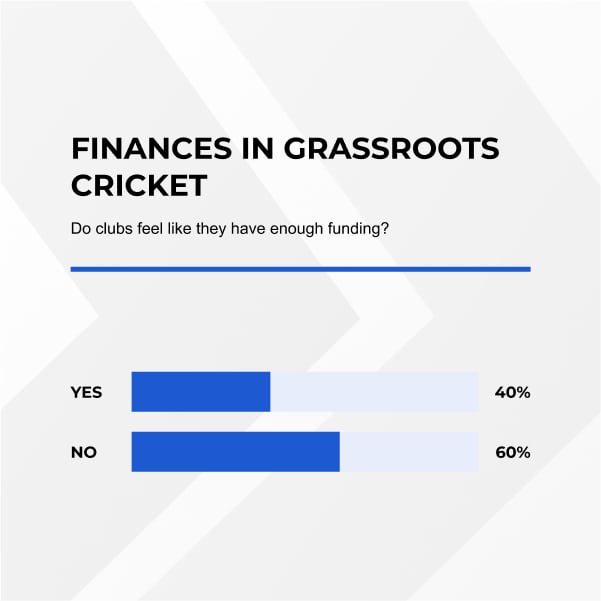
- 60% of clubs say they don’t have enough funding to support their activities.
- Three in five clubs (61%) say they are using equipment that is beyond normal wear and tear.
- Nearly half (48%) of clubs have had matches threatened by cancellations due to a lack of players.
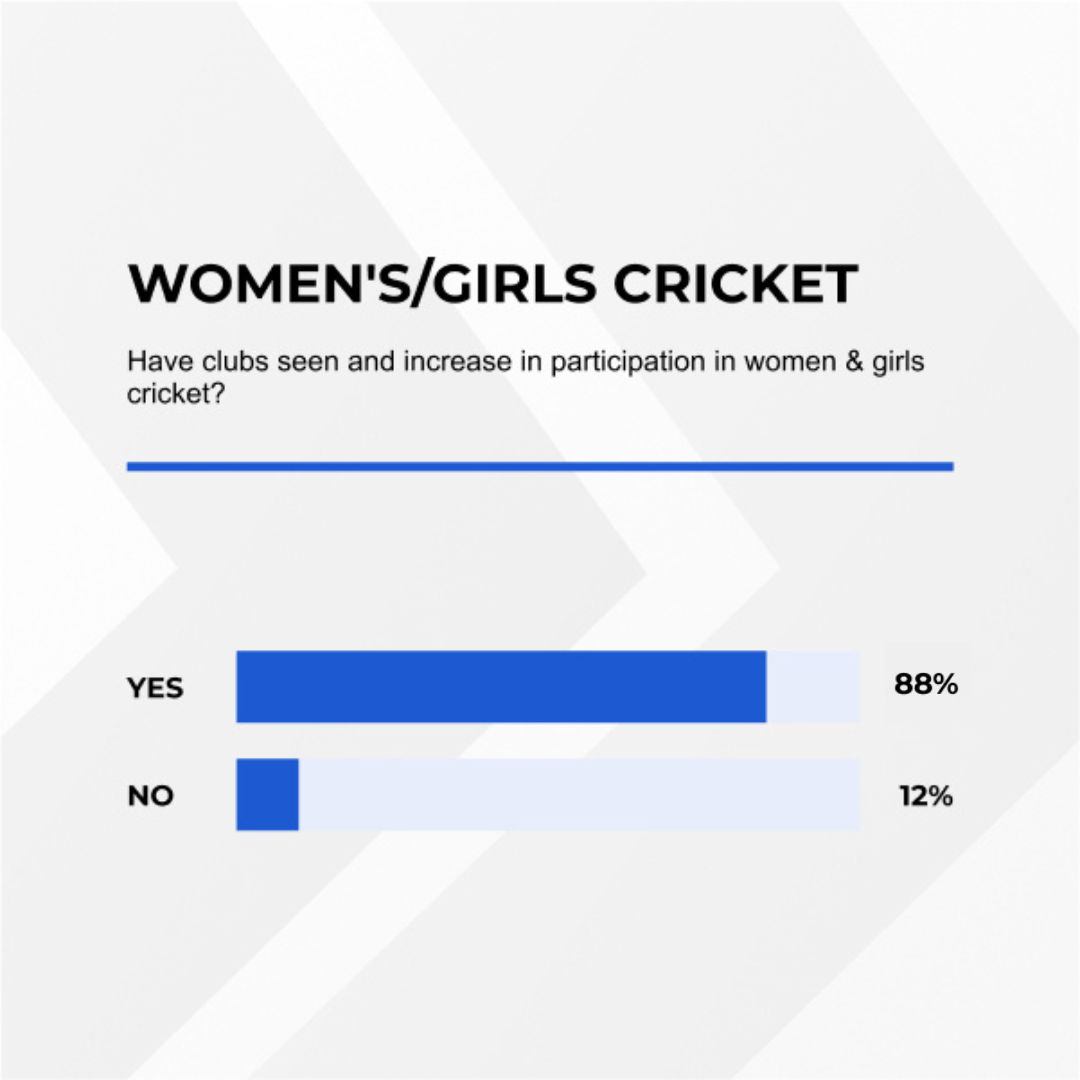
- Almost all (88%) clubs have seen an increase in participation in women’s and girls' cricket in recent years.
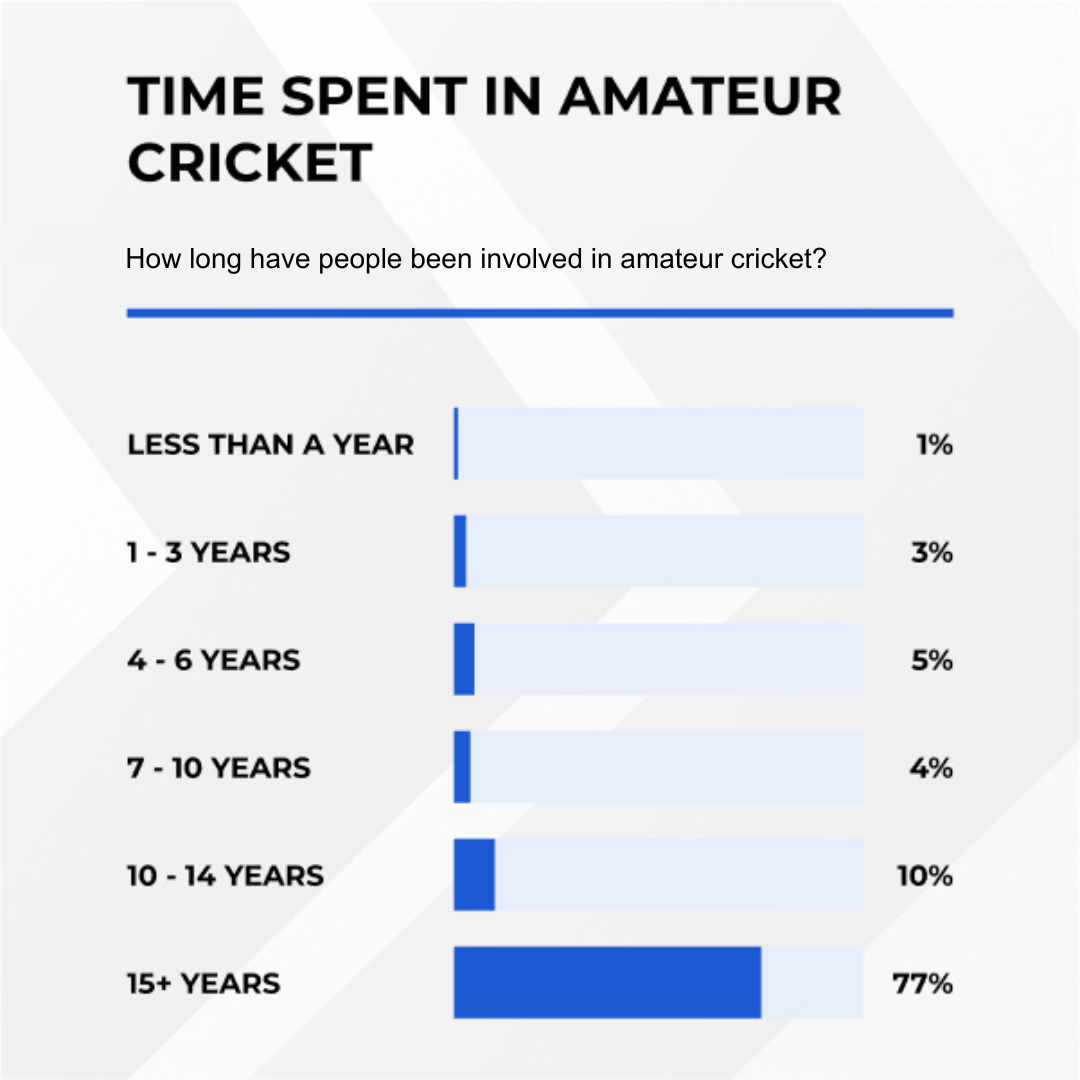
- Over three quarters (77%) have been involved with grassroots cricket for 15 or more years.
Financial Pressures Grow Due to Lack of Funding
At the core of the challenges is funding; clubs simply do not have enough money. Our survey showed that 60% of clubs say they do not have sufficient funding to support their activities. 7 in 10 clubs (69%) stated that a lack of funding is one of the biggest challenges they are facing.
There are several contributing factors, with running costs being one of the biggest challenges. Nearly 8 out of 10 clubs (78%) say their weekly costs exceed £250 a week, whilst 37% of clubs are spending £500 or more each week to keep their club going.

Worryingly these costs are only going up, with 90% of clubs saying their running costs have increased in recent years. 59% of those reported an increase of more than 10%.
The majority of clubs (76%) have a central pot of funds that all teams share, and those funds are under increasing pressure. Raising funds has never been more important, and 95% of clubs said they rely heavily on player subscriptions as a primary source of income. Nearly 3 in 4 (72%) of clubs said sponsorships help raise funds, and 69% use fundraisers and events to bring money into the club.
These ongoing efforts to generate income are potentially, at least in part, down to a lack of support. Only 16% of clubs said they receive funding from regional cricket boards and/or the ECB, whilst even fewer clubs (12%) received grants from local authorities. With only 3% of clubs being fortunate enough to be supported financially by private investors, the feeling of many clubs is that more needs to be done to support and help grassroots clubs.

Clubs Overachieving Despite Facility Challenges
Having already highlighted the funding issues clubs across the UK are facing, it’s perhaps unsurprising that 2 out of 3 (64%) clubs said that rising facility and equipment costs is another ongoing challenge.
A major factor that impacts facility costs is the ownership status of the pitch's clubs utilise week in week out. 1 in 3 (32%) clubs own their facilities, which compares favourably to the 12% of grassroots football clubs that own their grounds. 2 in 5 (42%) teams lease their pitch, whilst 22% of grassroots cricket clubs rent their pitches.

When respondents were asked to rate their facilities, the average rating came out at 6.62 out of 10. Only 11% of respondents scored their facilities 4 out of 10 or worse, which suggests most class their facilities as average or better. A third of clubs (34%) scored their facilities 8/10 or better, which is encouraging.

Although only a third of clubs own their facilities, the majority (79%) are responsible for maintenance. The generally positive outlook is testament to the dedication and hard work of volunteers (often in challenging circumstances) who work tirelessly behind the scenes.
Footfall at clubs is high with most clubs (88%) having 2 or more teams, and over half (53%) having 6 or more teams. Despite the fact many clubs' field multiple team's, half of them (48%) are reliant on the use of a single pitch. 29% of clubs have two pitches which means 77% of clubs have either one or two pitches that all teams use.
You’d expect that the reliance on one or two pitches would impact the quality of the playing surface, but the average rating for pitch quality was high at 7.35 out of 10. Nearly half (48%) of clubs scored the quality of their pitch/pitches as 8 out of 10 or better. This is even more impressive given the unpredictable British weather that clubs deal with throughout the season, which was highlighted by the fact that 78% of clubs have had weather-related match cancellations.
Worn and Limited Equipment Poses a Major Challenge
Cricket equipment is essential for player development and coaching, so it’s concerning that 61% of clubs said that they are using equipment which is beyond normal wear and tear. Just under half of respondents (40%) said that their club doesn’t have enough equipment to operate with, meaning players and coaches are faced with equipment shortages. Given that 90% of clubs said that their equipment is shared across multiple teams, it’s apparent that outdated equipment and equipment availability is an ongoing challenge for clubs.

Clubs across the UK and around the world utilise cricket nets & cages for training and matchday warm-ups. Although designed to withstand sustained use, all cricket nets & cages suffer from general wear and tear over time so the fact that 71% of clubs have not refreshed their practice nets and cages in the last 3 years suggests that many clubs may be using nets that are past their best.

Our survey data supports this, with only 36% of clubs rating their practice nets & cages as either ‘Good’ or ‘Excellent’. 1 in 10 said rated their nets & cages as ‘Very Poor’ and a further 13% said their nets & cages are in ‘Poor’ condition. 31% of respondents noted that practice cages and nets would be the priority for their next equipment purchase so there is an appetite to improve things but given the funding challenges clubs are facing it’s realistic to think that clubs will be using nets & cages that at best look worn, and at worst are potentially unsafe.
Equipment issues are compounded by vandalism, with 15% of clubs saying they have experienced vandalism at their club. This places an even greater strain on clubs that are already trying to get by with equipment that has seen better days
Player Availability Issues Amid Growth in Women’s and Girls’ Teams
One major threat for many grassroots cricket clubs is player availability. 44% of clubs said that low or inconsistent player numbers is an ongoing challenge for them, and nearly half (48%) said they have had matches threatened by cancellations due to a lack of players.
Over half (51%) raised that retaining young players is an issue. One contributing factor is the competition cricket faces from other sports, with 41% of clubs saying that they are competing for players with sports such as football and rugby.

A key issue which many respondents raised is the time it takes to play some formats of cricket, with many suggesting that shorter formats would make the game a more attractive proposition to younger players in particular.
It is not all doom and gloom however, as our survey results showed that a strong passion for the game remains. 3 in 4 clubs (75%) stated that they rely solely on unpaid players that play for the love of the game. 24% of teams said 1-25% of their players are paid by the club, and only 1% of clubs that responded said that 76-100% of their players are paid.
A big success story for grassroots cricket is the growth and future outlook of women’s and girl's cricket. 88% of clubs said that they have seen an increase in participation in recent years. Encouragingly, 3 in 5 (59%) clubs said that they have a women’s or girls' team, and of those that do 60% have more than one team.
Volunteers: The Heartbeat of Grassroots Cricket
Without the hard work, dedication and passion of volunteer's, grassroots cricket wouldn’t exist. The heartbeat of amateur cricket, 57% of clubs told us that they have no paid staff and rely solely on unpaid volunteers. 62% of clubs said that they have 11 or more volunteers, and nearly one in three clubs (29%) have more than 20 unpaid volunteers helping at their clubs.

For many, their involvement in grassroots cricket dates way back, with 77% saying that they have been involved in grassroots for 15+ years. 70% said that they have been involved with their current club for 10+ years, and 6 in 10 (60%) have completed 15+ years with the same team, highlighting their dedication to the sport.
Despite predominantly relying on unpaid volunteers, 88% of respondents said their club coaches have recognised coaching badges which shows their passion for delivering the best possible guidance to players.
Unfortunately, finding volunteers with this level of commitment is easier said than done. Nearly a third (64%) of clubs said that a shortage of volunteers and coaches is one of their biggest challenges. Some respondents expressed concerns about the future of their club because of what they classed as an ‘aging volunteer base’. For our survey we reached out to grassroots cricket clubs across the UK and 5% of respondents were aged 25 or under, whilst 29% were aged 55 or older, which could potentially support these concerns although there could be other contributing factors in play.
One of the standout aspects of the survey relates to the reasons why volunteers enjoy being involved in grassroots cricket. Building friendships and connections was highlighted by 86% of respondents, making it the most popular reason given. 81% said their passion and love for cricket drives their involvement, whilst 77% said team spirit and shared achievements is a motivating factor. Seeing players grow in confidence and skill (76%), being part of the local community (71%), giving back to the game (66%) and creating a fun and inclusive environment (65%) were also leading reasons.
Despite the challenges that most clubs are facing, optimism remains with 70% of respondents saying that they are optimistic about the future of their club, and 63% saying that they are optimistic about the future of grassroots cricket overall.
It is this resilience and spirit that will keep grassroots cricket alive for future generations to enjoy.
Summary
Net World Sports is proud to support the grassroots cricket. We continue to design and provide accessible, innovative equipment that helps lower the barriers for aspiring players and clubs across the UK and beyond.
Our survey data showed that 81% of cricket clubs were founded before 1950 – a reminder of the game’s rich history and the generations it has inspired. Looking ahead to 2025 and beyond, we’re committed to ensuring these historic clubs not only survive but thrive so they can continue to be at the heart of their communities for the next 75 years and more.
As part of this research, 6 clubs were awarded vouchers to spend on cricket equipment for their clubs. Those clubs have been informed, and they are free to use their vouchers on equipment such as cricket nets, training aids, ground equipment and more.
Methodology:
The Net World Sports Grassroots Cricket Survey collected 124 responses from clubs across the UK between 1st August and 1st September 2025. The survey covered topics including funding, facilities, equipment, staffing, and the growth of girls’/women’s teams.
Follow us on social media for more updates and reports: