The Ultimate Guide to Rebound Nets & Boards
Learn All About Rebounders for Football, Cricket & Other Sports
Professional sports training keeps evolving. Modern technical practices and fitness sessions, tend to lean on more specialised tools and equipment. Coaches and players now expect to use training aids that have been designed to develop specific elements of performance, and the market has followed to meet the demand. Few products have changed the look of practice sessions as much as the sports rebounder. It’s simple, versatile and, for many teams and individual athletes, an essential training tool.
Returning the ball at speed, a rebounder gives you repetition and those vital hours of practice without a partner. A convenient, highly effective and efficient training tool, rebounders sharpen touch, timing, reflexes and decision-making. With adjustable rebounders, you can angle the face and change the trajectory. For example, you can keep the surface of the rebounder flat for crisp passes and more predictable rebounds. You can tilt the surface and angle it up for aerial rebounds that are ideal for practising catches in cricket and aerial ball control and volleys in football.
Footballers will often use a variety of rebounders including boards and nets. Cricketers and basketball players use rebounder nets for catching, passing and throwing drills. Goalkeepers in every code use rebounders to train almost every element of their game, including reactions and coordination.
For intense and effective solo and partner drills, rebounders are the superior training tool of professional coaches. They work on grass pitches, on tennis courts, in sports halls, or in the back garden. Fantastic for spontaneous training sessions as you can train alone, having a rebounder set up in the back garden or yard is almost guaranteed to get you, or a loved one, practising and exercising more.
Combined with a FORZA football goal or hoop for example, it adds an element of interactivity and variety when training solo.
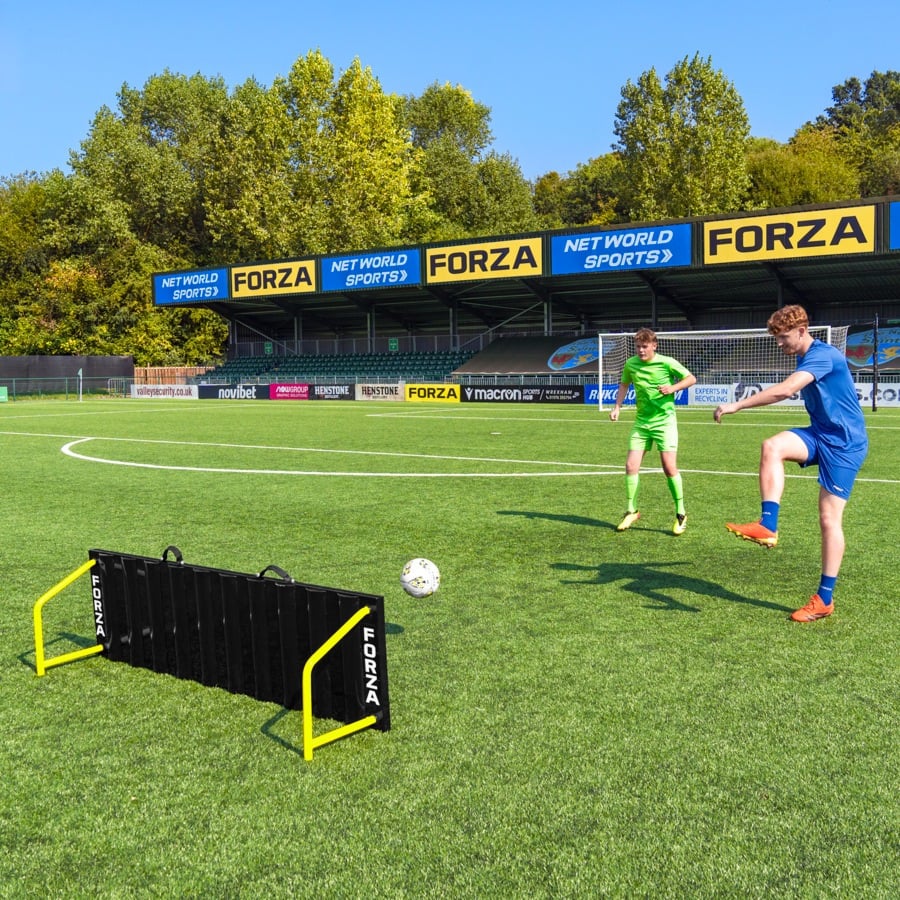
Choosing the right rebounder depends on your sport, your training location and your training goals. Think about the space you have available; if you are looking for a back garden rebounder for solo practice, you will probably want a different type of rebounder than a coach who is sourcing the best type of rebounder for team training sessions that take place on a full size pitch.
Weatherproof materials will also matter and be an important factor to consider, if you train outside all year. Safety is also an important consideration to keep in mind; especially if you are buying a rebounder for a child. Look for safe edges, secure anchors and rubber feet.
In this guide, we will cover all types of rebounders and how to use them. We will compare flat boards, netted frames and curved faces. We will point to drills for juniors, clubs and solo sessions. By the end, you will have the knowledge to choose with confidence.
How do you use a rebounder?
Using a rebounder is simple, they can be set up in a matter of minutes and used in a variety of different ways. Once set up, you must position yourself at an appropriate distance, adjust the rebounder’s angle to your desired trajectory and focus on the specific skills you want to build.
Rebounders are great for developing reaction time, ball control and accuracy, so anything from passing drills back and forth to using it to set up shots or goalkeeper drills. If you are unsure how to get going, then simply start with simple drills, like passing practice and over time increase the intensity and practice shooting and forceful aerial passes. Check out our video below to see how they are used.
The History of Rebounders
What are rebounders?
A sports rebounder is a piece of training equipment which is designed to simulate the return of a ball, allowing players to practise various skills on their own. They come in a variety of forms, from net rebounders to solid panels, they each create a different type of bounce which can cater to different sports training sessions. Having this piece of equipment is essential for most players and athletes as it helps them refine their reaction time, ball control and accuracy.
Origin of Rebounders
Rebounders evolved from the early development of trampolines. Before they became recreational, trampolines were initially developed in the 1930s as training tools, the flexible surface was designed to create a rebounding effect for gymnastics training. The principles of a controlled bounce were designed to help athletes train, and it laid the foundations for the concept of sports rebounders later.
Over time trampolines became useful for more sports, they were refined into smaller, more targeted training tools which were used to simulate ball returns. They are incredibly versatile, being used by football, basketball, tennis and cricket players, they have become immensely popular among coaches and athletes.
How to Choose a Rebounder
Now you know about the history of rebounders, we can now dive into the types. There are many different types of rebounders, some are used for specific sports where others are perfect for multi sports, there are also important things to consider before buying. In this section, we will show you our range of FORZA rebounders.
What size rebounder is best?
This very much depends on the sport you are playing, the available space you have and the training objectives. For sports like football and rugby, where the main concentration is long passes and shooting, then we would recommend a larger rebounder as it offers more varied returns.
Alternatively, for sports where close range reflexes and ball control are important such as cricket or baseball, a smaller or handheld rebounder would be more beneficial.
Beyond that, it is important to consider how much space you have, as large rebounders can take up a lot of space, so it is important to keep that in mind as well.
Rebound Boards vs Rebound Nets
When buying a rebounder, you may want to take note of the different types available as they all have their own benefits.
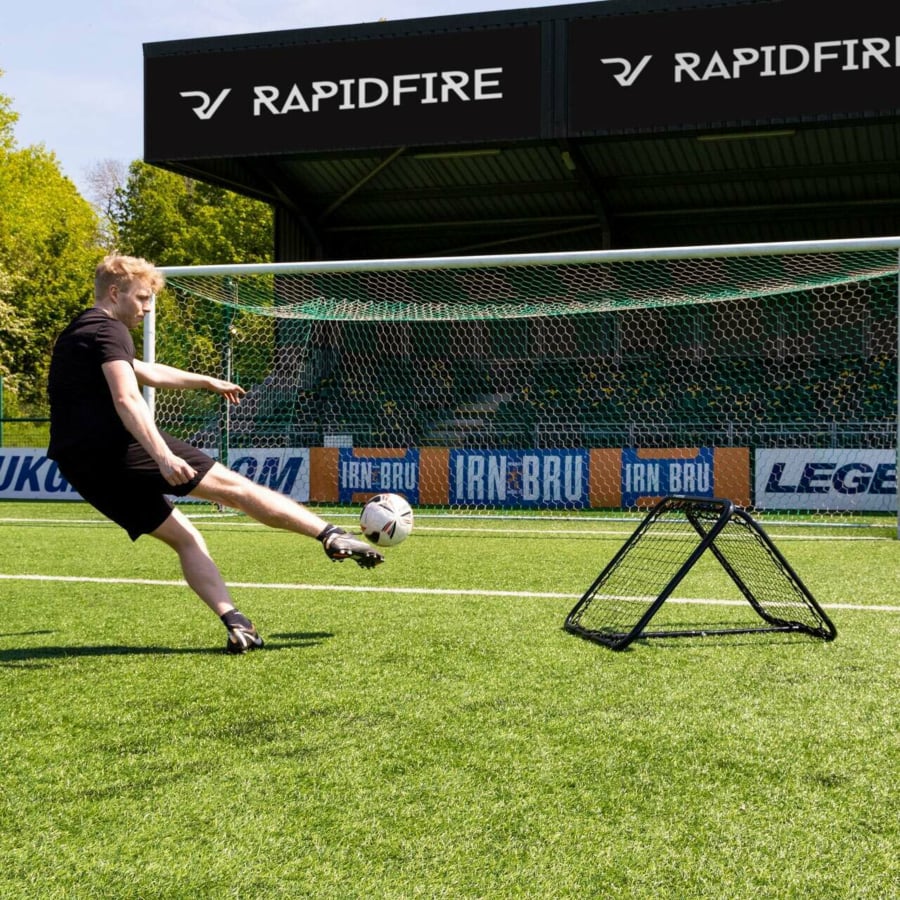
Rebound boards and rebound nets both offer advantages for sports training. Rebound boards have a solid surface and are often adjustable, providing a firm and predictable bounce, which is ideal for developing ball control and close-range skills. These types of rebounders are renowned in the football world for passing drills and first touch skills sessions.
Rebound nets feature a flexible netting, offering a varied and less predictable return, simulating a real-game scenario. These nets are perfect for developing agility and reaction time. They are very versatile, making them suitable for football, cricket, tennis and much more.
Handheld vs Larger Rebounders
As noted previously, rebounders come in many sizes, so it is always handy to know how much space you have before making a purchase. But what are the benefits of using a handheld or large rebounder?
Handheld rebounders are the smallest option for rebound training. They prioritise close range and rapid-fire drills which can help to develop fast reflexes and motor control. They are ideal for individual training and favoured in sports like tennis, goalkeeper training and basketball where having quick reactions are paramount.
Larger rebounders typically use one big net or are equipped with multiple nets. They can cater to a large variety of skills and sports. Medium sized rebounders strike a balance between passing drills and volleying techniques in football and rugby to bowling and racket exercises for cricket and tennis.
Extra-large rebounders have a larger surface area making them perfect for long distance practice. These rebounders simulate a game like scenario for extensive ball movement and offer a great variety of returns. The large surface area offers a wider return which can cover a larger field, meaning they can demand more physical activity from players. They are used in a wide variety of sports including football, rugby, lacrosse, and tennis.
Return Speed & Angle Adjustability
How the ball comes back matters. A tighter net or harder board gives a faster, truer return. A looser net softens the rebound and stretches the contact time. Angle is the other lever. Keep it low for ground passes and first-touch work. Tilt it mid for wall passes and quick give-and-go drills. Raise it high for aerial takes, keeper reactions, or close-catching. Look for quick-lock angle settings, stable feet, and anchors so you can change the picture without wobble.
Portability & Storage
If you train at the local park rather than your backyard, or need to pack away after every session, portability and storage matter. Choose a rebounder that folds flat and can be packed away quickly and safely. Light enough to carry and simple enough to set up solo, look for a rebounder with quick-release hinges and a carry bag with padded straps. As a guide, rebounders under 10kg are relatively easy to carry; much heavier feels awkward for most people to carry for any considerable distance. Both of our RapidFire pop-up rebounders, including the RapidFire Flash II, weigh under 10kg and fold away neatly into a carry bag that fits easily into the average car boot, outdoor ottoman or bedroom wardrobe.
RapidFire RF Rebounders are also lightweight, fold flat and feature quick-release pins for simple assembly, dismantling and storage.
Rebounder Materials
Consider the frame and the net materials that a given rebounder is made with. When looking at rebounder frames, consider that steel adds toughness and stability but adds weight. Fibreglass frames are much lighter, but less robust. UV-stable and weatherproof nets are durable and last longer than other nets, especially if you train year-round.
RapidFire rebounders are manufactured using a range of ultra-durable materials. For example, the RapidFire Mega Rebounder and Jumbo Football rebounder, have galvanised steel frames, with weatherproof PE nets for extreme bounce. The RapidFire Pop-Up rebounders feature fibreglass frames and lightweight, yet robust Oxford fabric carry bags. Ideal for those looking for a portable rebounder, the pop-up models are robust enough to last for many seasons, but are light enough to be considered easy to transport and store.
Folding board-style frames suit coaches who move between pitches and want a firmer return. Regularly used by professional football clubs and academies, board style rebounders require slightly more accuracy and control than, for example a 9ft x 7ft Jumbo Rebounder Net for football.
Whatever material the rebounder is made out of, dry the net and frame before packing it away to prevent any form of rot or mildew. Store rebounders away from direct heat and sunlight.

What sports can rebounders be used for?
Rebounders can be used for a wide variety of sports which we will list below and explain how they are used and what they look like.
Football Rebounders
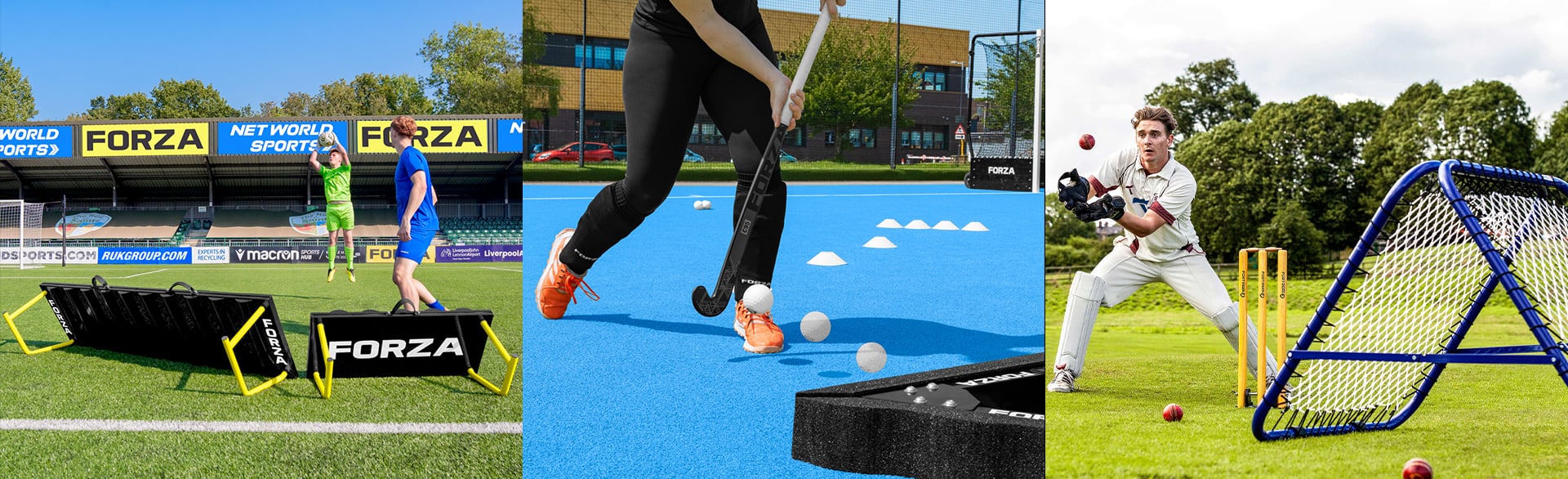
Football rebounders are the perfect asset for developing various skills. Rebound boards are the go-to for practising passing accuracy, first touch control and short-range volleys. Rebound nets with their varying adjustable angles, allow for goalkeepers and players to practise with aerial balls moving at pace, and are great for developing chest control and volleying techniques. For football there is a combination of medium sized adjustable rebound nets which can be used for varied skill sets, and smaller rebound boards for precision passing.
| FORZA Football Rebounders & Net World Sports Practice Walls Comparison | |||||
|---|---|---|---|---|---|
| Type | Key Benefits | Versatility | Portability | Adjustability | Ideal Use Cases |
| Boards | Fast, accurate rebounds ideal for passing drills & shot precision | Moderate (mainly passing & shooting) | High (compact and easy to move) | Low | Solo passing & shot accuracy drills |
| Interactive X Rapidfire Wave Boards | Interactive training with adjustable rebound waves for variable ball response & skill challenge | High (pass, catch, reaction drills) | Moderate (requires some space & setup) | High (adjustable rebound profiles) | Advanced passing & reaction training |
| Rebound Nets | Dynamic, multi-angle rebounds perfect for varied drills | Very high (passing, shooting, catching) | Moderate (foldable options available) | High (angle adjustable) | Solo & team drills, skill variety |
| Pop-up Nets | Quick setup, very lightweight, great for home training | Moderate (limited drill variety) | Very high (easy to transport & fold) | Low | On-the-go practice & home use |
| Multisport Practice Net Return Wall | Heavy-duty, multi-sport use | Very high (football, golf, baseball) | Moderate (aluminum frame, portable but larger) | Low | Best suited to training with multiple balls |
Use the table as a quick reference for choosing a football rebounder. Start with your training goals - if you want laser-sharp passing and first-time finishes, go for a board. It gives a firm, predictable return so every rep is predictable but firm. Want variety and game-like chaos? Pick a rebound net with adjustable angles. Change the angle and you’ll get ground passes, waist-high feeds and looping aerial returns in one session.
Also consider the space and how often you’ll move your rebounder. Pop-up nets are light, fold fast and suit gardens or quick spontaneous sessions. Coaches who set up on full-size pitches will prefer sturdier frames with clear angle markers.
Cricket Rebounders
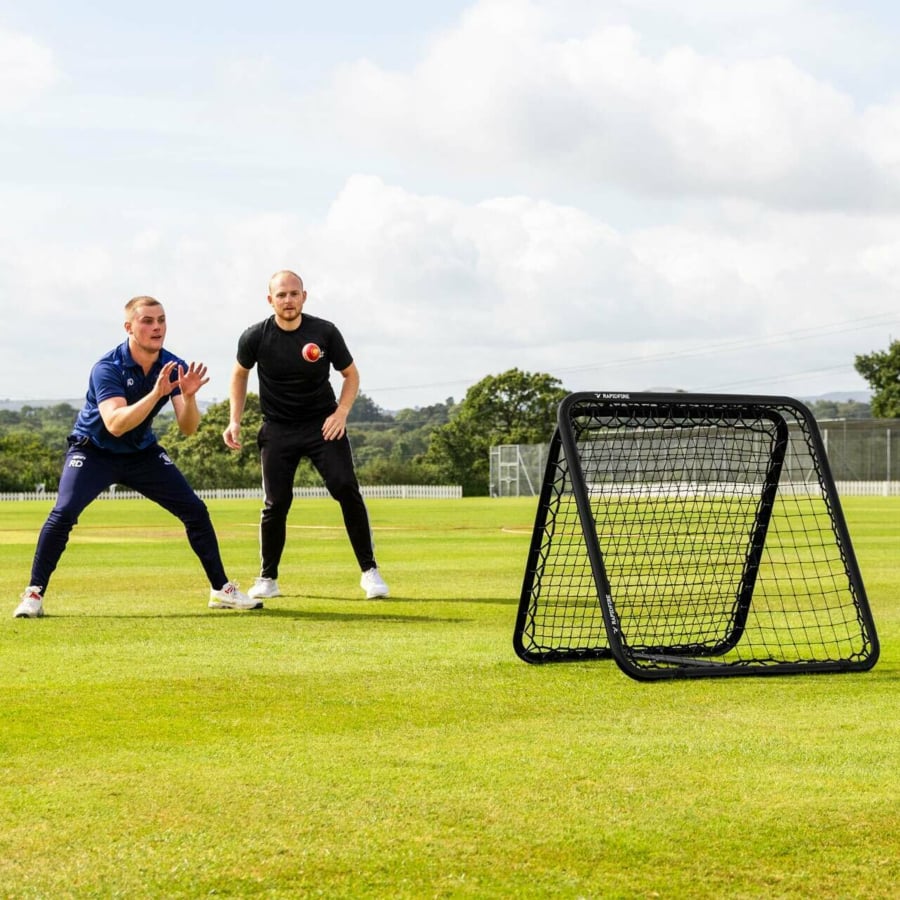
Cricket rebounders are a crucial piece of training equipment which can help to refine catching, fielding and batting reflexes. Rebound boards with varied surface angles can simulate different ball trajectories, which can help fielders practice high catches and ground balls. Rebound nets can be used for close range catching drills and improving reaction time. In cricket it is essential to use a sturdy rebounder which can be used in a variety of angles to properly maximise your training.
Basketball Rebounders
Basketball rebounders provide you with the perfect training partner when you’re working solo. Use them to build passing accuracy, catch-and-shoot rhythm, and reaction speed. Net rebounders fire the ball back with pace and at different angles, so you can drill chest passes, bounce passes, and quick releases again and again.
Our FORZA range includes adjustable pass-back nets and hoop shot returners and returner nets that feed shots straight back to you. They set up fast, angle easily, and suit driveways, gyms, and courts. If you are tight on room, opt for a pop-up pass-back net or one of the smaller RapidFire RF Rebounders.
Rugby Rebounders & Rebound Balls
Rugby is a game of physicality, tactics and skill. When it comes to skill, passing and catching are fundamental. This is true for the entire team, but especially for scrum-halves, fly-halves. In addition, a good inside-centre, who is often the ‘second receiver’ of the ball and other backs such as full-backs must be excellent at catching passes and high balls.
Whilst the “10,000-hour rule” set out by Malcolm Gladwell in his book about elite performers called Outliers; maybe an over-simplification; putting in hours of consistent "deliberate-practice" is undoubtedly a key aspect of fulfilling your potential as an athlete or in this instance, as a rugby player. A high-quality rebounder is arguably the best piece of rugby training equipment for solo practice sessions. Rugby rebounders allow players to practice passing and catching in the most efficient manner possible. Rebounder nets are great for improving reactions and reflexes, improving catching technique, and for training in pairs.
Whereas rebounder nets offer versatile skill training focused on reactions, rebounder rugby balls are ideal for solo passing practice. Designed with a flat base, rebounder rugby balls are ideal for practising standard spin passes, building muscle memory. Whilst the rebounder rugby balls are a different shape, they are a similar weight and the same circumference, meaning that hand positioning and technique is directly transferable to standard rugby balls. For best results in terms of skill development, use both a rebounder ball and a rugby rebound net.
Hockey Rebounders
A hockey rebounder greatly enhances training by allowing players to practice passing, receiving, and shooting. This enables players to improve core technical skills and tactical awareness efficiently. As with rebounder nets and boards for all sports, hockey rebounders allow players to tally up hours of practice, even when training alone, at home or in the back garden.
Maximising repetitions, the FORZA Hockey Rebounder comes with 3 different surfaces – straight, angled and curvy. Players can use the straight surface for practicing the fundamentals of passing technique, whilst the angled and curvy surfaces will also build reactions and hockey-specific coordination and footwork.
Volleyball Rebounders
As with many other sports, with volleyball you get better by practising the fundamentals, again and again. The FORZA Volleyball Rebounder makes effective practice easy. Hit the ball into the net and it fires straight back to you, so you can keep the rally going on your own. Tilt the frame and you change the return. Flat for simple passes. Angled for higher balls or emergency digs. It’s great for setters (the teammate who puts the ball up to be hit) and liberos (the defensive specialist who keeps the ball off the floor).
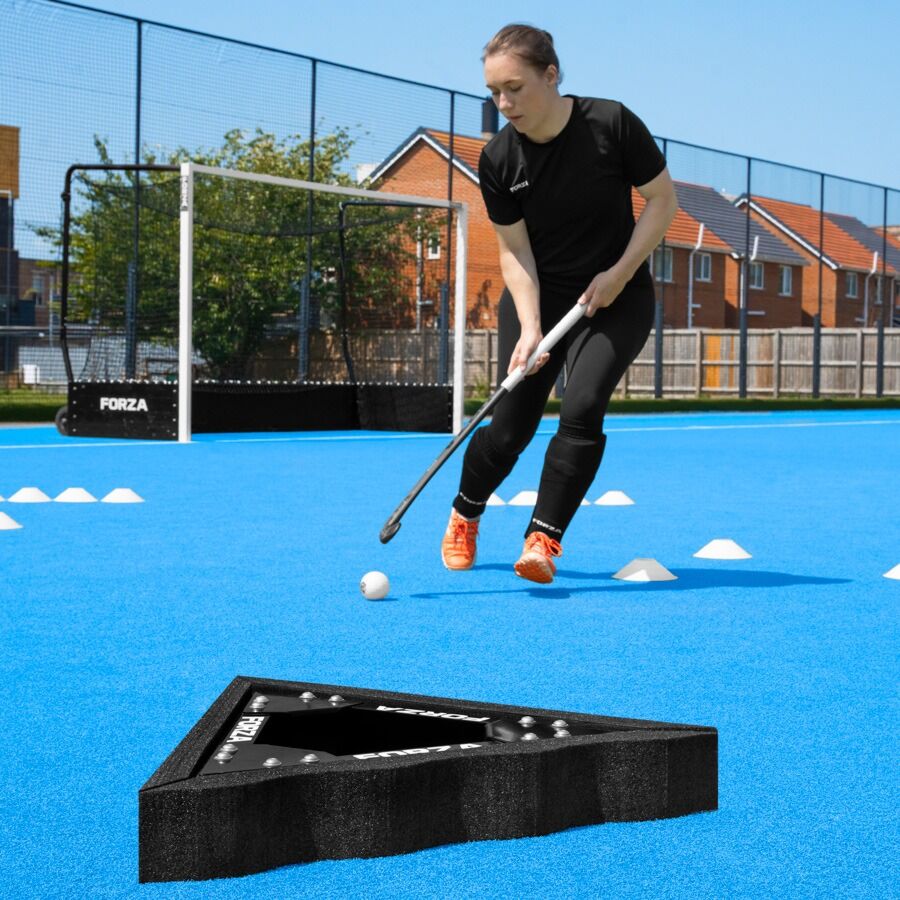
The hockey rebounder is simple to set up and pack away. With a powder-coated steel frame, the rebounder is stable when you’re training hard and hitting hard shots and passes. Designed for use on a range of floors and surfaces, despite the heavy frame, the rebounder is suitable for hockey pitches and sports hall floors. You can use it in a gym, on a court, or in the garden. Add FORZA target rings or floor markers to create hitting zones and serve spots.
Tennis Rebounders
Tennis rebounders make great training companions whilst practicing solo. You can focus on stroke consistency and reaction speed. Net rebounders can simulate varied returns for you to practice forehands, backhands and volleys repeatedly. Our FORZA range offers a large inflatable rebound wall which can be used at various angles developing a range of returns. Tennis rebounders are typically quite large in size, so it is important to make sure you have the available space, if not you can always try our handheld rebounders which are perfect for rallies and accuracy training when training with a coach.
Combining Rebounders with Other Equipment
Whilst practising the basics again and again, is a great way to build an individual skill like passing technique, by combining a rebounder with other training equipment, you can easily create endless variations for solo and team practice sessions that train and develop all the fundamental elements of performance for your chosen sport.
Multiple Rebounders
By using multiple rebounders, players can create a wide variety of drills involving passing, receiving/catching, footwork like pivoting and reactions. For example, a football player or coach could position two rebounder nets, around 15m apart and facing each other. A highly effective solo drill using this set-up is to start in the middle, halfway between the two rebounders and pass or shoot the ball into the first rebounder, pivot 180° and shoot or pass the ball into the opposite rebounder.
Marker & Spot Cones
Cones are great for footwork drills, for organising and determining distances to throw, pass or shoot from, and for adding sprints and dribbling practice. For a full workout including fitness and speed and agility work, you can also add hurdles and speed ladders to create a training session that targets almost every aspect of performance.
Return Nets
Excellent for basketball training sessions, using a basketball return net, combined with a basketball hoop and a rebounder, allows players to carry out efficient and effective passing, catching and shooting training sessions.
Goal Targets & Mini Target Goals
A common combination for football training, using a rebounder with a goal target sheet, a mini target goal and/or passing arcs allows players to develop accuracy and to practice passing, control, pivoting and shooting. Setting up a rebounder facing opposite a goal with a target for example, a player can pass the ball into the rebounder, control the return, pivot and then shoot. This type of drill works best with a goalkeeper or when multiple balls are available.
Make Every Touch Count
Rebounders turn practice into progress. They give you repeatable reps, and highly efficient practice sessions, without a partner. They can help to sharpen touch, technique, timing and decision-making. Pick the model that fits your sport, space and goals. Remember that "practice makes permanent". Getting feedback incrementally, can ensure that you technique is on point. If you don't have a coach, you can always video your training and assess your technique yourself or ask your coach to.
At Net World Sports we supply a huge range of rebounders for sports including football, cricket and basketball. We also supply elite teams and athletes with other training equipment and aids that can be used with or without rebounders including basketball return nets, football goals, mannequins, target sheets, training cricket balls and backstop nets.